ArchivesAnglotopia Podcast

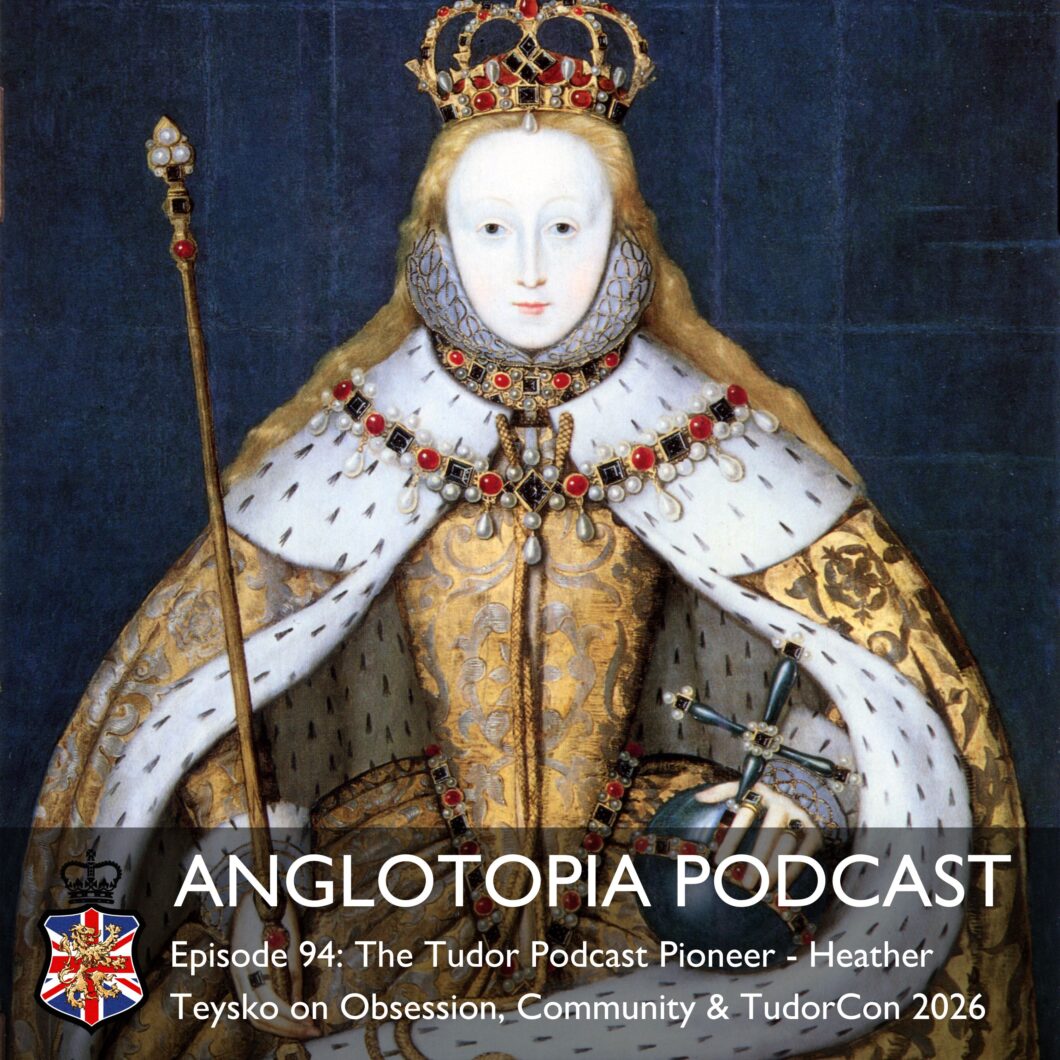
Anglotopia Podcast: Episode 94 – The Tudor Podcast Pioneer – Heather Teysko on Obsession, Community & TudorCon 2026

Anglotopia Podcast | Discussing UK British Travel, History, Culture, London, British Slang, and More!
Anglotopia Podcast: Episode 94 - The Tudor Podcast Pioneer - Heather Teysko on Obsession, Community & TudorCon 2026
Loading
/

In this episode of the Anglotopia Podcast, Jonathan Thomas is joined by Heather Teysko — host of the Renaissance English History Podcast, founder of TudorCon, and one of the true pioneers of independent history podcasting. Heather started her podcast back in 2009 on a Labor Day weekend whim, with a cheap microphone and no idea how to edit audio, and has since built it into one of the longest-continuously-running independent history podcasts in the world, alongside a book community, online summits, a Tudor planner, and TudorCon — the world’s first Tudor history convention, now in its seventh year. Jonathan and Heather swap stories about falling in love with Britain, building history audiences online, resisting the shiny lure of algorithm-chasing, and why genuine passion is the only thing that makes any of this work. They also dig into TudorCon 2026 — taking place October 23rd–25th at the extraordinary Agecroft Hall in Richmond, Virginia, a genuine 15th-century English manor house that was disassembled and shipped to America piece by piece — where Anglotopia is proud to be a sponsor.

Anglotopia Listeners can use the code ANGLOTOPIA to get 15% off the Tudorcon ticket price or Tudorcon from home.

For Tudorcon, they can go to https://tudorcon.englandcast.com; that’s the full Tudorcon site.

For Tudorcon From Home, you can go to englandcast.com/tudorconfromhome and get a Tudorcon from home ticket.

Use the code ANGLOTOPIA to save 15% on both pages.

Links

Takeaways

  • Heather Teysko launched the Renaissance English History Podcast in 2009 — the only Tudor history podcast in existence at the time — and very nearly canceled it in 2013 when she discovered it was getting 40,000 downloads a month without her having posted a new episode in nearly a year.
  • The spark for Heather’s Tudor obsession was singing William Byrd’s Ave Verum Corpus in a high school choir and realising that Byrd was writing secret Catholic music in Latin while serving Elizabeth I’s Protestant court — a teenage existential crisis that never really ended.
  • TudorCon, which began as an online summit and went in-person in 2019, is now expanding significantly for 2026 — moving from a single-track event at Agecroft Hall to a multi-track conference with five classrooms and a reception hall, thanks to a new partnership with Randolph-Macon College in Ashland, Virginia.
  • Agecroft Hall is a genuine 15th-century Lancashire manor house that was purchased, disassembled stone by stone, and shipped to Richmond, Virginia in the 1920s by a wealthy tobacco entrepreneur who wanted to live in an authentic English manor — including the original medieval glass, which had to be transported separately by road to avoid cracking.
  • TudorCon is deliberately designed to sit between an academic conference and a Renaissance fair — costume-friendly, open to non-academics, and built around the idea that passionate enthusiasts with deep knowledge of a specific corner of Tudor history have just as much to contribute as credentialed scholars.
  • TudorCon From Home is a full live-streamed experience with its own host, dedicated talks, special events, and a real community feel — the online attendees even took a group screenshot last year to include in the official TudorCon group photo.
  • Heather lived in England for two years in her mid-20s on a BUNAC visa, spending weekends picking random train destinations and exploring — including accidentally attending the Durham Miners’ Parade without knowing what it was.
  • After nearly 16 years treating her Tudor work as a hobby, Heather made a deliberate mental shift 18 months ago to treat it as a business — and has since signed a book deal with Countryman Press (an imprint of WW Norton) for The Tudor Fan Guide, due out in summer 2027.
  • Both Heather and Jonathan agree that chasing algorithms and platform trends is a dead end — the only sustainable strategy is making content you’re genuinely passionate about and trusting that your specific audience will find you.
  • Heather is currently deep in a rabbit hole on medieval female mystics — including Julian of Norwich, Margery Kempe, and Elizabeth Barton (the Maid of Kent), the only woman in recorded history to have her head displayed on London Bridge.

Soundbites

  • “William Byrd was writing Catholic music in Latin about transubstantiation while he was writing Protestant theological services for Elizabeth I. And something about that really spoke to the teenager in me — nobody understands my deep dark soul.” — Heather on the moment that sparked a lifelong obsession.
  • “I logged in and I looked at my statistics. And this thing was getting like 40,000 downloads a month. And I was like, what the heck? I guess I’ll keep this live.” — Heather on almost cancelling the podcast in 2013.
  • “I had a young person’s rail card. Every weekend I would show up at a random train station, look at where the trains were headed, and pick a place that sounded interesting. I wound up in Durham Cathedral for the miners’ parade without knowing what a miners’ parade was.” — Heather on her two years living in England.
  • “I wanted to build something that was a mix of an academic conference with the fun of a Renaissance fair — where you could wear costumes, but you’re actually focused on the history. And I think it’s pretty cool.” — Heather on the founding vision of TudorCon.
  • “Tudor nerds tend to be islands of nerdiness surrounded by people who roll their eyes when we want to talk about transubstantiation. Just having a space for all these people to be together in real time was really awesome.” — Heather on why the community side of TudorCon matters more than the talks.
  • “It’s the friendliest place in the world. People are always nervous about coming if they don’t know anybody. Absolutely, you can come by yourself — because it’s just the nicest group of people around.” — Heather on what first-time TudorCon attendees always say.
  • “I could listen to somebody read train schedules if they were enthusiastic about it and loved it. That genuine passion for something — it’s not something you see every day. When you see people who really have it, it’s infectious.” — Heather on what makes content communities work.
  • “She was starting from nothing — she had nothing. And she was paying me and treating it like a business. And I had this realization: I have way more reach than she does, and I keep treating my stuff like a hobby. So it’s going to always stay that way.” — Heather on the moment she decided to take her own business seriously.
  • “I used to feel guilty working on my podcast because I was like, I’m just doing my Tudor stuff. But now I’m like, actually, this is a business. Mom’s going to work now. Mom needs to not be disturbed because mom is working.” — Heather on the mental shift that changed everything.
  • “There’s a community dedicated to roundabouts in Wales. There are 8 billion people in the world — surely a couple thousand of them share what you’re passionate about. The internet gives you the tools to bring them together.” — Heather on why niche communities always find their audience.

Chapters

  • 00:00 Introduction — Jonathan introduces Heather Teysko and TudorCon, and announces Anglotopia as a 2026 sponsor
  • 02:17 How Tudor History Started — William Byrd, high school choir, and a teenage existential crisis about transubstantiation
  • 04:29 Moving to England at 24 — BUNAC visas, headhunting firms, Barnet, and random train adventures
  • 07:19 Starting the Podcast in 2009 — A Labor Day whim, a cheap microphone, and no idea how to edit
  • 09:38 The Early Podcasting Landscape — Why nobody treated it as a business, and how the show evolved
  • 11:00 Almost Cancelling Everything — 40,000 monthly downloads, a baby, and a very close call
  • 12:27 Moving to Spain and Finding a Business Model — Throwing things at the wall, a failed Tudor radio network, and a slow evolution
  • 13:44 The Online Summit That Led to TudorCon — The Facebook group, the debates, and realising community was the magic sauce
  • 15:02 TudorCon’s History — From first in-person 2019 to pandemic pivot to Richmond expansion
  • 15:52 TudorCon 2026 — Multi-track expansion, Randolph-Macon College partnership, and why Jonathan is finally going to Agecroft
  • 16:00 What Is Agecroft Hall? — A real 15th-century Lancashire manor house shipped to Virginia stone by stone
  • 18:37 The TudorCon 2026 Speaker Lineup — Nathan Amin as keynote, John Dee’s experiments, everyday Tudor life, and Virginia’s local Tudor connections
  • 21:21 What Surprises First-Time Attendees — The friendliness, the inclusivity, and the magic of being around your people
  • 23:05 TudorCon From Home — The live stream, Heather’s husband as host, and the group photo story
  • 24:43 A Discount Code for Anglotopia Listeners — Details in the show notes
  • 25:09 The Churchill Conference Comparison — Jonathan’s experience and the Philadelphia America 250 connection
  • 26:41 Building a History Community — What Heather has learned about authenticity, passion, and why shiny marketing objects always fail
  • 29:51 On Expanding Too Far — Why Francotopia and New Zealandopia were bad ideas, and why passion can’t be replicated
  • 30:31 The New Zealand Girls’ Trip — Nine months old, postpartum depression, and one of the worst decisions of Heather’s life
  • 31:52 Travelling with Infants — Jonathan’s Diamond Jubilee trip with a six-month-old and the Oxford ring road
  • 33:18 Chasing Algorithms vs. Staying Authentic — How both Jonathan and Heather learned the same lesson the hard way
  • 34:25 The Value of Community in the Age of AI — Why human connection and shared passion can’t be replicated by technology
  • 34:54 What’s Coming on the Renaissance English History Podcast — Female mystics, Julian of Norwich, Elizabeth Barton, and following the rabbit hole
  • 36:50 The Business Shift — From “my Tudor stuff” to a real business, a book deal with WW Norton, and a Tudor app in development
  • 41:21 Two Hobby-Turned-Businesses Compare Notes — Jonathan and Heather on what it feels like when the hard work starts paying off
  • 42:51 Wrap-Up — Where to find Heather, TudorCon details, and a reminder that Anglotopia is a proud 2026 sponsor
Video Version

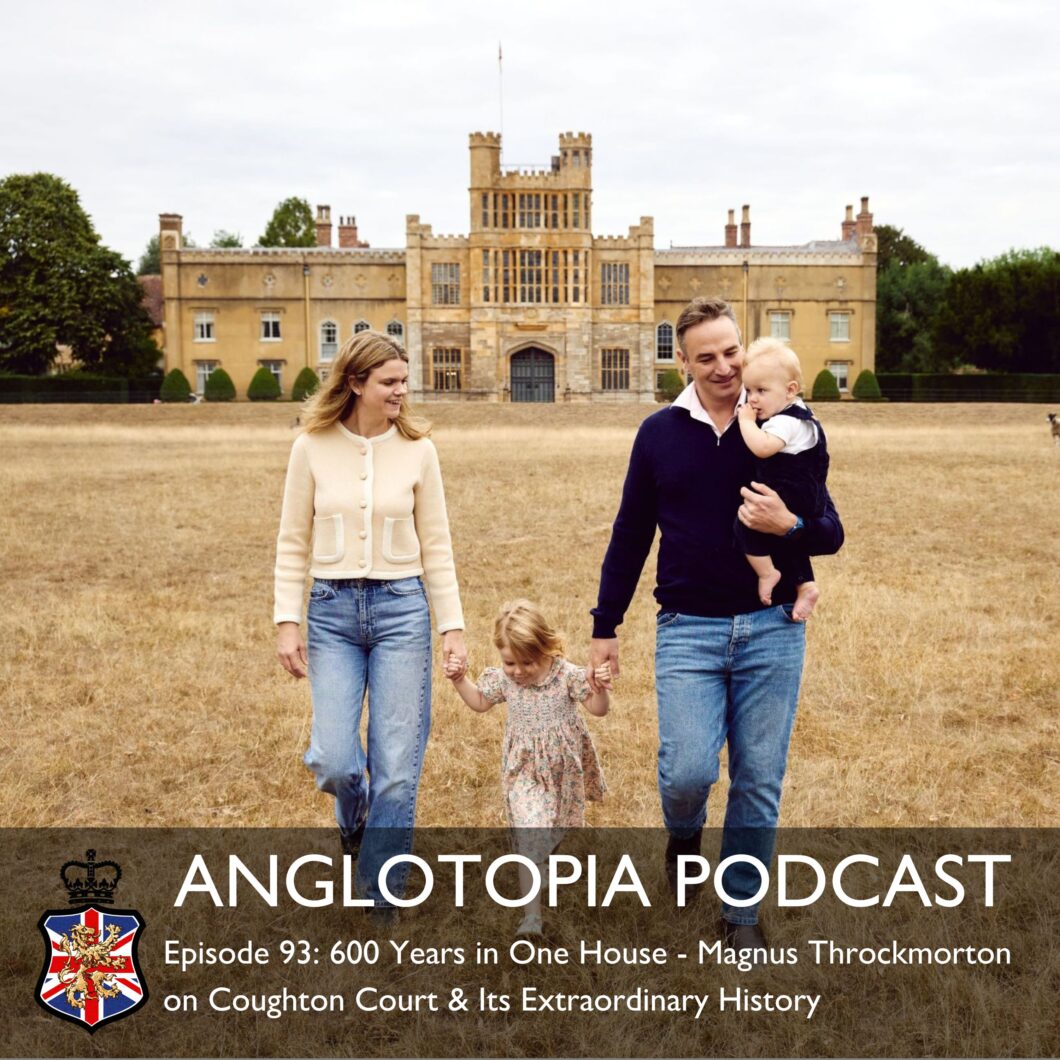
Anglotopia Podcast: Episode 93 – 600 Years in One House – Magnus Throckmorton on Coughton Court & Its Extraordinary History

Anglotopia Podcast | Discussing UK British Travel, History, Culture, London, British Slang, and More!
Anglotopia Podcast: Episode 93 - 600 Years in One House - Magnus Throckmorton on Coughton Court & Its Extraordinary History
Loading
/

In this episode of the Anglotopia Podcast, Jonathan Thomas is joined by Magnus Birch Throckmorton, the latest custodian of Coughton Court — a Tudor manor house in Warwickshire that has been home to the Throckmorton family for over 600 years. Coughton Court is one of England’s most historically charged houses: its great gatehouse was built during the reign of Henry VIII, its walls conceal a double priest hole from the Reformation, and on the night the Gunpowder Plot collapsed in 1605, it was the very house where the plotters’ families waited for news. Magnus walks Jonathan through six centuries of survival, faith, and family — from Sir George Throckmorton’s audacious confrontation with Henry VIII over Anne Boleyn’s marriage, to the sacking of the house during the English Civil War, to the remarkable women of Coughton who kept it alive through every crisis. Magnus also shares what it’s like to raise his young children in this living, breathing house, what he and his wife Imogen have introduced since taking over direct management in March 2026, and why American Anglophiles should make Coughton a priority stop on any Midlands itinerary.

Links

Takeaways

  • The Throckmorton family has lived at Coughton Court since 1409 — predating Columbus’s voyage to America — making it one of the longest unbroken family occupancies of any historic house in England.
  • Sir George Throckmorton, who built the great gatehouse around 1530, was audacious enough to confront Henry VIII directly over his marriage to Anne Boleyn — and somehow survived by throwing himself on the king’s mercy.
  • Coughton Court has a double priest hole: a decoy chamber above a hidden second chamber, designed so that searchers would find the first and assume it empty, never discovering the one below.
  • The Throckmorton family were connected to — but not directly implicated in — the Gunpowder Plot of 1605. The plotters’ wives and Father Garnet waited at Coughton for news of whether the plan had succeeded or failed.
  • During the English Civil War, Coughton was sacked and plundered, leaving it in a state of ruin that took generations to rebuild.
  • Among the most remarkable objects in the house are a chemise believed to have been worn by Mary Queen of Scots at her execution in 1587, and a cape attributed to Catherine of Aragon and her ladies-in-waiting.
  • The award-winning gardens were designed from scratch in 1991 by Magnus’s mother for his grandmother, including a rose labyrinth deliberately full of dead ends, designed to slow visitors down and make them appreciate the colours and scents.
  • Since taking over direct management from the National Trust in March 2026, Magnus and Imogen have introduced a café using hyper-local producers, a charity bookshop, artist residencies, workshops from willow weaving to botanical pottery, Tai Chi, yoga, a monthly supper club, and a summer programme of outdoor theatre.
  • Coughton is just 20 minutes from Stratford-upon-Avon and easily reachable from the Cotswolds — making it a natural addition to any Shakespeare Country itinerary.
  • The property includes two churches — one Catholic, one Protestant — with Throckmorton ancestors buried in both, a quirk that speaks directly to the family’s extraordinary journey through five centuries of English religious history.

Soundbites

  • “It’s incredibly exciting — quite scary that your ancestors are looking down at you judging every step of the way. They’ve got the lovely portraits as you walk up the stairs, so you can’t get away from them.” — Magnus on being the latest custodian of Coughton.
  • “It’s still a family home. It’s not a statue in time. It’s still breathing, it’s still living, it’s still evolving — and it really tells the story of one family who’ve stayed true to being Catholic the whole way through.” — Magnus on what makes Coughton different.
  • “He said it is wrong to have meddled with both mother and sister — to which the king replied, it was never with the mother. So Sir George obviously had a nature of being able to push the boundaries.” — Magnus on Sir George Throckmorton’s confrontation with Henry VIII.
  • “The Throckmortons were not directly implicated in the Gunpowder Plot. They were one step away. None of the plotters had a Throckmorton name — which is probably the reason we’re here today.” — Magnus on the family’s Gunpowder Plot connection.
  • “We have a chemise believed to have been worn by Mary Queen of Scots at her beheading. There’s a Latin inscription saying Mary Queen of Scots at her execution on the 8th of February 1587. She was an incredibly tall lady, so it is a very long chemise.” — Magnus on one of the house’s most extraordinary objects.
  • “It was a thousand guinea bet — shear two sheep and wear the coat between sunrise and sunset. They shorn the sheep, wove it, dyed it, and it was worn at the feast that evening. The biggest travesty was the two sheep were served at the banquet.” — Magnus on the famous Throckmorton Coat wager of 1811.
  • “The ladies are the ones who maintain and keep these houses going. They put their life and soul into it and the character of it. My grandmother was one of the first female QCs in the UK. These women are sometimes forgotten about in the grand stories.” — Magnus on the women of Coughton.
  • “We are not necessarily close to anywhere, but we’re never that far away. You can get to anywhere within an hour and a half — and we’re 20 minutes from the Cotswolds, 20 minutes from Stratford.” — Magnus on Coughton’s surprisingly central location.
  • “Some people come to the UK expecting these houses to be the new Downton Abbey. There is no grandeur here. This is a living and breathing family house — we’ll take you on our story, and you’ll get an insight into what it’s like living at Coughton.” — Magnus on the personal experience he and Imogen offer visitors.
  • “My daughter is very good at watering on a Saturday. Mainly she waters the paths, not the plants — which is probably a thing, otherwise the gardeners would tell us off.” — Magnus on raising children at Coughton Court.

Chapters

  • 00:00 Introduction — Jonathan sets the scene at Coughton Court and introduces Magnus Throckmorton
  • 01:58 A New Chapter Begins — Coughton’s March 2026 reopening under Magnus and Imogen’s direct management
  • 02:19 600 Years of Continuity — What that extraordinary length of connection to one place feels like from the inside
  • 03:11 Raising Children at Coughton — Hector, Isabella, hide-and-seek, and the priest hole problem
  • 05:01 What Is Coughton Court? — A living Tudor family home, its history and why it matters
  • 07:09 Sir George Throckmorton & Henry VIII — The courtier who dared oppose the king’s marriage to Anne Boleyn
  • 09:07 The Reformation and Catholic Persecution — Fines, recusancy, and the double priest hole
  • 11:35 The Gunpowder Plot of 1605 — How Coughton became the waiting room for the plotters’ families
  • 14:30 The English Civil War — Sacked and plundered, and the long road to rebuilding
  • 15:32 The Women of Coughton — The overlooked figures who kept the house alive across the centuries
  • 17:00 WWII and the Speaker of the House — Coughton’s designation as a wartime safe house
  • 17:38 First Impressions — What an American visitor sees walking through the gates for the first time
  • 18:22 Where Is Coughton Court? — Geography, distances, and how it fits into a Midlands itinerary
  • 19:40 Must-See Highlights — The panelled dining room, Mary Queen of Scots’ chemise, Catherine of Aragon’s cape, and the Throckmorton Coat
  • 23:47 The Award-Winning Gardens — Designed in 1991, the rose labyrinth, and Imogen’s new influence
  • 26:08 Two Churches, One Estate — The Protestant and Catholic churches and the ancestors buried in both
  • 28:01 Taking Over from the National Trust — What it means to personally open the doors again
  • 29:46 New Ventures — The café, bookshop, workshops, artist residencies, supper club and more
  • 31:55 Coughton as a Community Hub — The village fête, dementia awareness days, and the volunteer team
  • 33:19 The Historic Houses Network — What joining has meant for advice, connections, and visibility
  • 34:43 Coughton’s USP — One family, one faith, 600 years, and gardens that change with every season
  • 36:31 Why Americans Should Visit — The personal touch, the family access, and the Shakespeare Country connection
  • 40:37 Summer 2026 at Coughton — Roses, herbaceous borders, outdoor theatre, and very good ice cream
  • 41:43 Wrap-Up — Opening hours, website link, and how to find Coughton Court

Video Version

We Want Your Questions about Britain for our 100th Episode Q&A

Anglotopia Podcast | Discussing UK British Travel, History, Culture, London, British Slang, and More!
We Want Your Questions about Britain for our 100th Episode Q&A
Loading
/

A quick but exciting announcement from Jonathan: the Anglotopia Podcast is approaching its 100th episode, and to celebrate, Jonathan and Jackie — Mrs. Anglotopia herself — are sitting down together for a special no-script, no-agenda Q&A episode, just like they did for Episode 50. Anything goes: the history of Anglotopia, upcoming trips, favorite corners of Britain, TV recommendations, the monarchy, British culture — you name it. Submit your questions now using the link in the show notes, or drop them in the comments on here, YouTube, Instagram, or Facebook. Don’t wait — they’re recording soon!

Link

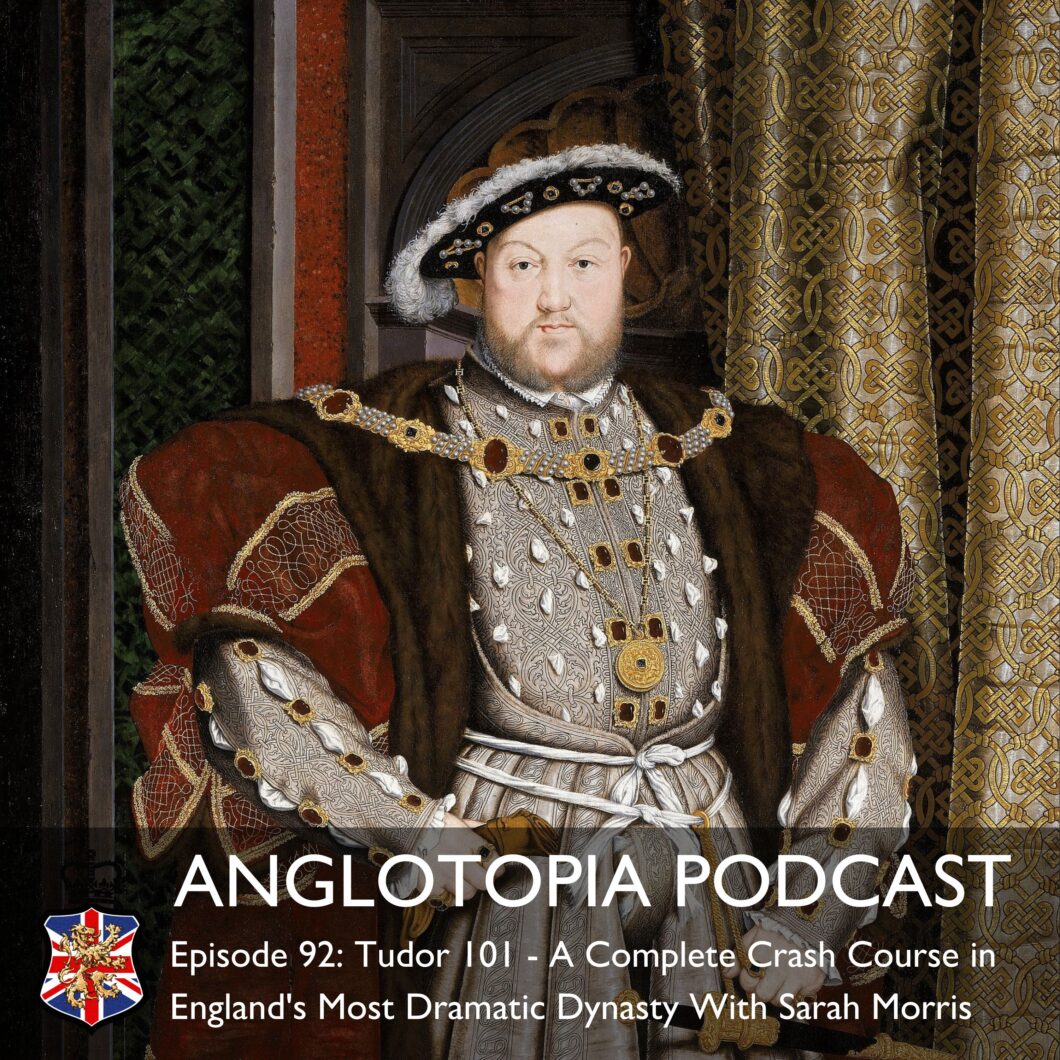
Anglotopia Podcast: Episode 92 – Tudor 101 – A Complete Crash Course in England’s Most Dramatic Dynasty With Sarah Morris

Anglotopia Podcast | Discussing UK British Travel, History, Culture, London, British Slang, and More!
Anglotopia Podcast: Episode 92 - Tudor 101 - A Complete Crash Course in England's Most Dramatic Dynasty With Sarah Morris
Loading
/

In this episode of the Anglotopia Podcast, Jonathan Thomas is joined by Sarah Morris — creator of the Tudor Travel Guide, author of multiple Tudor books, including her novel about Anne Boleyn, and co-founder of Simply Tudor Tours — for a sweeping, entertaining, and deeply informative crash course in Tudor Britain. Calling it Tudor 101, Jonathan and Sarah walk through the full arc of the dynasty: from the unlikely origins of Henry VII emerging from exile to win the crown at Bosworth, through the world-altering reign of Henry VIII and the break with Rome, the short and turbulent reigns of Edward VI and Mary I, and the remarkable story of Elizabeth I and how she turned vulnerability into a kind of genius. Along the way, they tackle the most misunderstood Tudor wife, untangle the confusing web of Marys in the family tree, explain the real-world devastation of the dissolution of the monasteries, and map out the social hierarchy of Tudor England from vagabonds to dukes. Sarah also shares her essential must-visit Tudor sites for American Anglophiles, gives insider tips on getting the most from historic houses and ruins, makes a passionate case for the Mary Rose Museum, and reveals which controversial Tudor drama she secretly loves — and why it launched her writing career.

Links

Takeaways

  • The Tudor dynasty was a genuinely unlikely outcome — Henry VII spent 12 years in exile before winning the crown at the Battle of Bosworth Field in 1485, and his claim to the throne depended on a chain of improbable events all lining up just so.
  • Henry VIII’s most consequential legacy isn’t his six wives — it’s the break with Rome and the dissolution of the monasteries, which was the largest transfer of wealth in British history and permanently reshaped the country’s physical landscape, religious life, and social structure.
  • Anne Boleyn is the most misunderstood Tudor wife — not the romantic schemer of popular legend, but a woman of serious religious principle who was a genuine catalyst for the English Reformation, including passing Henry the book that sharpened his theological break with Rome.
  • The dissolution of the monasteries was not an orderly administrative process — it was ransacking, burning, hacking apart, and looting of some of the most important buildings in medieval England, with monastic communities thrown out onto the street and abbots executed for resistance.
  • Tudor society was rigidly stratified into distinct layers — from outcasts and vagabonds at the bottom, through the deserving and undeserving poor, yeoman farmers, merchants, the gentry, the nobility, and the monarch — and most people’s lives were entirely shaped by where they sat in that hierarchy.
  • Elizabeth I’s greatest political achievement was turning her femininity from a perceived weakness into a kind of myth — culminating in the Virgin Queen persona, which elevated her to an almost goddess-like status and was, in Sarah’s words, “a stroke of PR genius.”
  • Bloody Mary and Mary Queen of Scots are entirely different people — Mary I was Henry VIII’s Catholic daughter by Catherine of Aragon; Mary Queen of Scots was a separate Scottish monarch and great-granddaughter of Henry VII, whose claim to Elizabeth’s throne made her a lifelong political threat.
  • For first-time visitors to Tudor England, Sarah’s essential London list is Hampton Court Palace, the Tower of London, Westminster Abbey’s Lady Chapel, and the National Portrait Gallery — and outside London, Hever Castle and Hatfield are the top priorities.
  • The Mary Rose Museum in Portsmouth is Sarah’s single most important Tudor site recommendation — 19,000 artefacts from Henry VIII’s sunken flagship, now with immersive film experiences, offering an unparalleled window into everyday Tudor life.
  • Sarah’s top pre-visit tip: always read about a place before you go, not after — and always step into the local parish church, which often contains extraordinary Tudor and medieval tombs that most visitors rush straight past.

Soundbites

  • “It is time and not space that separates us from the past. When I walk into a space and I can recreate in my mind’s eye what it was like in the 16th century, I feel like I’m much closer to history. It’s like pulling back the veil of time.” — Sarah on why visiting Tudor places transforms the experience of history.
  • “The Tudors have everything. Power, betrayal, brutality, glamour, the six wives of Henry VIII. These stories seem like they should belong literally in a Netflix movie rather than in history.” — Sarah on why the Tudor era captivates us five centuries later.
  • “Without Henry VII, there is no Tudor dynasty. You could imagine this nine-year-old lad fleeing to Brittany — the likelihood of him inheriting the crown is really slim. And yet these whole series of circumstances just line up.” — Sarah on the dynasty’s unlikely founder.
  • “Henry VIII bent the nation to serve his personal will. The break with Rome and the dissolution of the monasteries absolutely changed the physical landscape, the societal structure, and many aspects of cultural life in England.” — Sarah on Henry VIII’s true legacy.
  • “Anne Boleyn was a woman of profound religious principle. She was a catalyst — a really important catalyst — in the whole Reformation process, which had massive ramifications for the social and cultural and religious landscape of the country.” — Sarah on the most misunderstood Tudor wife.
  • “People turned up and ransacked these incredible medieval buildings. They pulled them apart, they hacked at them, they burned books and precious artifacts, they melted the roofs down and sold off all the goods and left these piles of smouldering ruins.” — Sarah on the dissolution of the monasteries.
  • “I know I have the body of a weak and feeble woman, but I have the heart and stomach of a king — and a king of England too. That encapsulates the miracle of Elizabeth.” — Sarah quoting Elizabeth I’s Tilbury speech.
  • “She created this version of the Virgin Queen — a physical image of almost deity. She elevated herself to almost a goddess-like quality that people could look up to and worship. It was an utter stroke of PR genius.” — Sarah on Elizabeth I’s most brilliant political move.
  • “Do your reading before you go, not after. And always go into the local parish church. I’ve been in some remote, out-of-the-way parish churches and found the most incredible medieval and Tudor tombs. They’re very easily rushed by.” — Sarah’s top two tips for visiting Tudor sites.
  • “I loved The Tudors. I know. Controversial. There was a lot in there that was not historically accurate — but it created this milieu of energy and interest that sparked my writing career off. So I’ve probably got a lot to be grateful for.” — Sarah on her favourite — and most controversial — Tudor drama.

Chapters

  • 00:00 Introduction — Jonathan sets up Tudor 101 and introduces Sarah Morris
  • 01:50 How Tudor History Became Sarah’s Career — From doctor to executive coach to Anne Boleyn novelist
  • 03:36 The Pivotal Moment at Hever Castle — A hot August day, a picnic on the lawn, and a novel begins
  • 06:09 The Tudor Travel Guide — Mission, audience, and connecting people to Tudor places
  • 08:15 Tudor 101: Origins of the Dynasty — The Wars of the Roses, Owen Tudor, and Henry VII’s unlikely path to the crown
  • 11:23 Why the Tudors Loom So Large — A turning point between medieval and modern, plus drama, portraiture, and artifacts
  • 14:19 Henry VII — The overlooked founder who brought stability and created the dynasty
  • 16:43 Henry VIII — Beyond the six wives: the break with Rome, Thomas Cromwell, and reshaping a nation
  • 19:16 Historical Blind Spots — Churchill off the money, digressing into post-1603 history, and everyone’s gaps
  • 20:32 The Six Wives — Which wife is most misunderstood, and Anne Boleyn’s real role in the Reformation
  • 23:21 Edward VI, Mary I & Elizabeth I — Walking through the three children and their dramatically different reigns
  • 28:45 Untangling the Marys — Bloody Mary vs Mary Queen of Scots, and how the family tree connects
  • 33:22 Elizabeth I — Intelligence, the Virgin Queen, Tilbury, Shakespeare, and the age of exploration
  • 37:50 The Reformation and the Dissolution of the Monasteries — The biggest wealth transfer in British history and its devastating human cost
  • 42:49 Daily Life in Tudor England — The full social hierarchy from vagabonds to dukes
  • 47:33 What the Tudors Left Behind — A more unified nation, rising nationalism, and the seeds of civil war
  • 49:29 Essential Tudor Sites in London — Hampton Court, the Tower, Westminster Abbey, and the National Portrait Gallery
  • 52:26 Beyond London — Hever Castle, Hatfield, and why you should always pair Hever with Penshurst
  • 54:41 Sites for Every Social Class — Weald & Downland, Little Moreton Hall, Speke Hall, Haddon Hall
  • 56:37 The Best Tudor Ruins — Fountains, Rievaulx, Jervaulx, Kenilworth, and Cowdray House
  • 58:32 The Mary Rose Museum — Sarah’s single most essential Tudor recommendation and why
  • 59:22 Portsmouth Historic Dockyard — Three eras of naval history and the ongoing HMS Victory restoration
  • 1:02:35 The “If Only I’d Known” Problem — Read before you go, and never skip the parish church
  • 1:05:44 Simply Tudor Tours — How Sarah and Adam Pennington founded the company and what makes it different
  • 1:08:33 2026 Tour Dates — Mary Queen of Scots in Scotland, the 1502 Progress, and the Rise and Fall of Anne Boleyn
  • 1:10:21 Favourite Tudor Drama — Sarah’s controversial answer, Natalie Dormer, and why inaccurate TV still matters
  • 1:13:31 The Downton Abbey Parallel — How popular drama creates waves of new history enthusiasts
  • 1:13:54 Wrap-Up — Links, tour spaces available, and an open invitation to return

Video Version

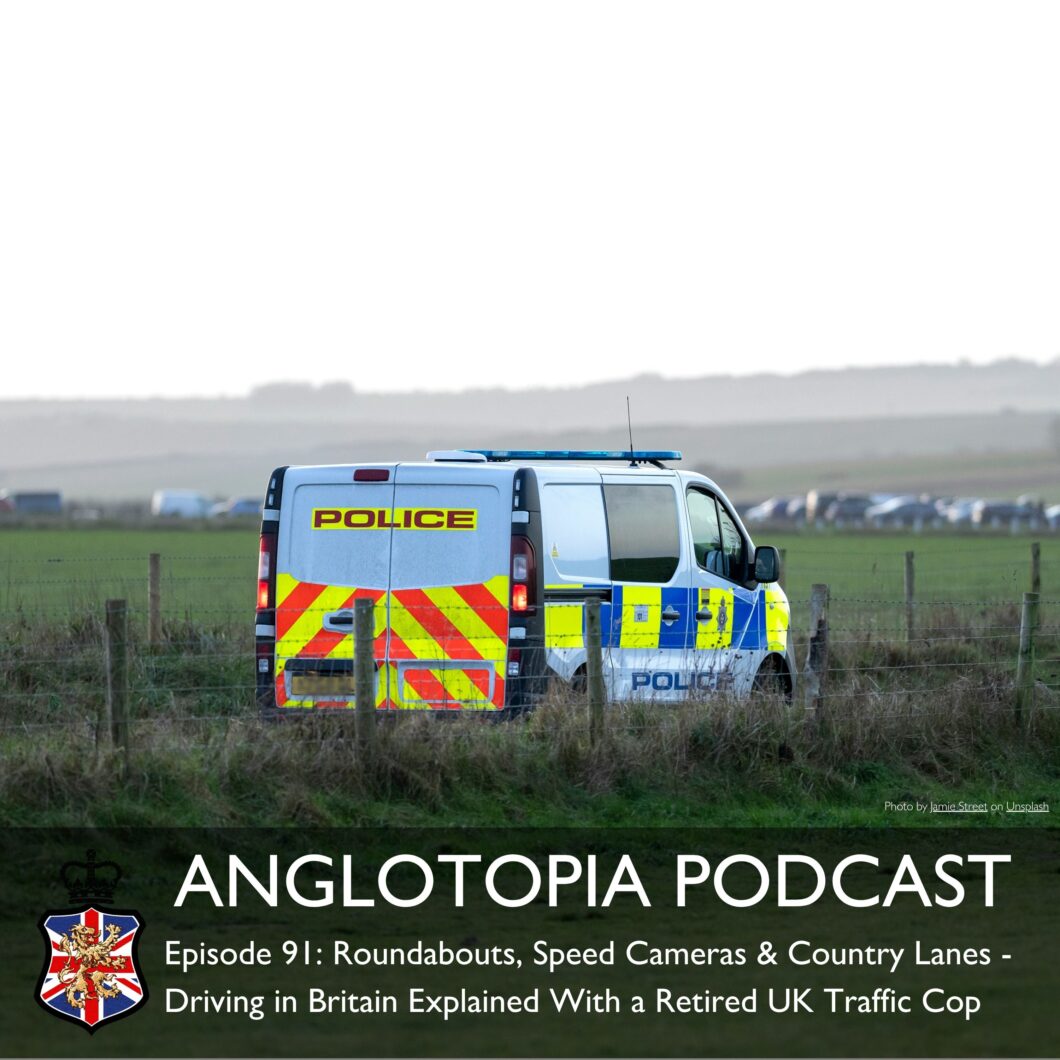
Anglotopia Podcast: Episode 91 – Roundabouts, Speed Cameras & Country Lanes – Driving in Britain Explained With a Retired UK Traffic Cop

Anglotopia Podcast | Discussing UK British Travel, History, Culture, London, British Slang, and More!
Anglotopia Podcast: Episode 91 - Roundabouts, Speed Cameras & Country Lanes - Driving in Britain Explained With a Retired UK Traffic Cop
Loading
/

In this episode of the Anglotopia Podcast, Jonathan Thomas sits down with Ben Pearson — retired West Yorkshire Police traffic officer, Police Interceptors TV veteran, bestselling author, and mental health advocate — for the ultimate American’s guide to driving in the UK. Ben spent 19 years on one of Britain’s elite roads policing units, handling high-speed pursuits, fatal collisions, and serious organized crime, and he brings that expertise to bear on every question American drivers have about navigating Britain’s roads. The pair cover the most common mistakes tourists make, how roundabouts actually work (and why signaling is advisory, not legally binding), the truth about speed cameras and the 10% rule, how the UK’s “ghost licence” system means your speeding history follows you every time you return to Britain, what to do if you’re stopped by police, how to handle narrow country lanes without panic, and why you should never — ever — touch your phone while driving. Ben also opens up about his diagnosis with complex PTSD after 19 years on the front line, the Code Zero mental health app he co-created for emergency service workers, and his life since leaving the force.

Links

Takeaways

  • Always carry your driving licence and documents when driving in the UK — police can’t issue a ticket without ID, which means you may be summoned to court instead, and non-compliance complicates everything significantly.
  • UK speed limits are a maximum, not a target. The national speed limit sign (white circle with a diagonal black line) means 70mph on motorways and dual carriageways, but drops to 60mph on single carriageway roads — and vans have different limits again.
  • Speed cameras allow a 10% plus two mph tolerance due to speedometer variance — but this is not a green light to speed, and a traffic officer can still stop and deal with you regardless.
  • The UK operates a “ghost licence” system for foreign visitors — a record that accumulates points each time you’re caught. Hit 12 points across multiple visits and you can be disqualified from driving in the UK and potentially arrested on your next trip.
  • Roundabout rule: give way to traffic from your right, choose your lane based on your exit (left lane for left, middle for straight on, right lane for right), and always indicate. But treat all indicators as advisory — never assume another driver will follow through on their signal.
  • Narrow country lanes require a completely different mindset to American roads — go slower than you think you need to, never cut corners, hug the left kerb line, and if in doubt, pull over and wait. No one will be angry with you for being cautious.
  • Never touch your phone while driving in the UK — the law is extremely strict, members of the public can film and report you (as Cycling Mikey does in London), and the consequences include points, fines, and potential prosecution.
  • If you’re stopped by a UK police officer, stay in your car, be calm and polite, and have your documents ready. British traffic police are not looking to ruin your holiday — but they do need to do their job.
  • Ben left the police in 2020 after being diagnosed with complex PTSD following 19 years dealing with fatal collisions and traumatic incidents. He now co-runs the Code Zero app and the 1965 charity, both dedicated to emergency service mental health support.
  • Britain is a small island but enormously rewarding to explore by car — and Ben’s parting advice is to go for it, slow down, enjoy it, and consider the NC500 in Scotland if you really want a road trip of a lifetime.

Soundbites

  • “Ever since I saw Frank Poncherello on that Kawasaki coming off that slip road, and that baseline kicks in — it just sent me on the path. I thought, I’ve got to be a police officer.” — Ben on growing up watching CHiPs and deciding his career.
  • “I came out in 2020 after being diagnosed with complex post-traumatic stress disorder. I just dealt with too many dead children and I wanted a change of life. I’ve moved on and all the better for it.” — Ben on leaving the force.
  • “I got pulled over by a cop in Florida. I got out like we do in England — hello, I’m a bit stupid, I’m from England. And I got shouted at: stay in your car, show me your hands. I were a bit like, this has gone wrong very quickly.” — Ben on his own experience being stopped by American police.
  • “Roundabouts — I do not understand why you find it so hard to deal with them, but it’s extremely funny to watch.” — Ben on American drivers and roundabouts.
  • “An indicator is an advisory motion. It’s me saying, hi, I think I’m going to go down here — but I might go in front as well. Until I do that move, you’ve got to stay still. It doesn’t stand for anything in a court of law.” — Ben on why you can never fully trust another driver’s signal.
  • “The speed limit is the maximum you should go at any time. It’s not a target.” — Ben on the most important principle of driving in the UK.
  • “If you’ve got 12 points on that ghost licence because you’ve gone through a lot of speed cameras and you’re not bothered — we stop you and you’re driving while disqualified, you’re arrested. Your insurance is void. The car is seized.” — Ben on the ghost licence system for foreign visitors.
  • “Don’t think because I can do it in the States, I can do it in the UK. The roads are completely different, the tarmac grip is different, even the tyres. Where you think you can get round at 60, the car might only want to do 40.” — Ben on spatial awareness and UK road conditions.
  • “Do not touch your phone for anything. Pull to the side of the road, turn the engine off, put the handbrake on — then touch your phone. The police don’t have to see you. A member of the public can just film you and send it straight to us.” — Ben on mobile phone laws.
  • “We are a small island, but we’re a big island for seeing stuff. Go to the castles, go to Scotland, go to York. Just smile — it might be someone’s last chance, and you might be the last person they ever interact with.” — Ben’s closing message to American visitors.

Chapters

  • 00:00 Introduction — Jonathan sets up the episode and introduces Ben Pearson
  • 02:29 Ben’s Background — Growing up watching CHiPs, joining West Yorkshire Police, and finding his calling
  • 05:13 Two Traffic Cops Swap Stories — Ben gets stopped in Florida; Jonathan gets starstruck by California Highway Patrol
  • 07:37 A Day in the Life of a UK Traffic Officer — Shifts, intel briefings, pursuits, and working in Bradford
  • 11:10 Common Mistakes American Tourists Make — Documents, speed limits, and roundabouts
  • 13:51 UK Speed Limits Explained — 30, 40, 50, national speed limit, dual carriageways, and why vans are different
  • 15:59 Roundabouts: How They Actually Work — Lane choice, right of way, and why standoffs happen everywhere
  • 19:03 Signalling on Roundabouts — The legal reality of indicators and the “ask the question” approach
  • 21:51 Driving on the Left — Spatial awareness, narrow lanes, cutting corners, and why you shouldn’t panic
  • 26:40 Country Lane Survival — Jonathan’s wife’s near-miss and Ben’s golden rule: just wait
  • 28:30 Speed Cameras — How they work, the 10% rule, and what actually triggers a prosecution
  • 31:05 The Ghost Licence System — How speeding points follow American visitors across multiple trips to the UK
  • 35:07 Getting Stopped by UK Police — What to expect, how it differs from the US, and what happens if you can’t be issued a ticket
  • 40:05 Phone Laws — Zero tolerance, Cycling Mikey, and when you are and aren’t allowed to use your device
  • (Post phone section) Congestion Charge & London Driving — Jonathan’s Heathrow penalty and urban UK driving quirks
  • (Final section) Ben’s Life After the Police — YouTube, books, the Code Zero app, the 1965 charity, and a new TV contract
  • 1:10:23 Wrap-Up & Final Tips — Ben’s parting advice: go slowly, enjoy it, consider the NC500, and be kind

YouTube Version

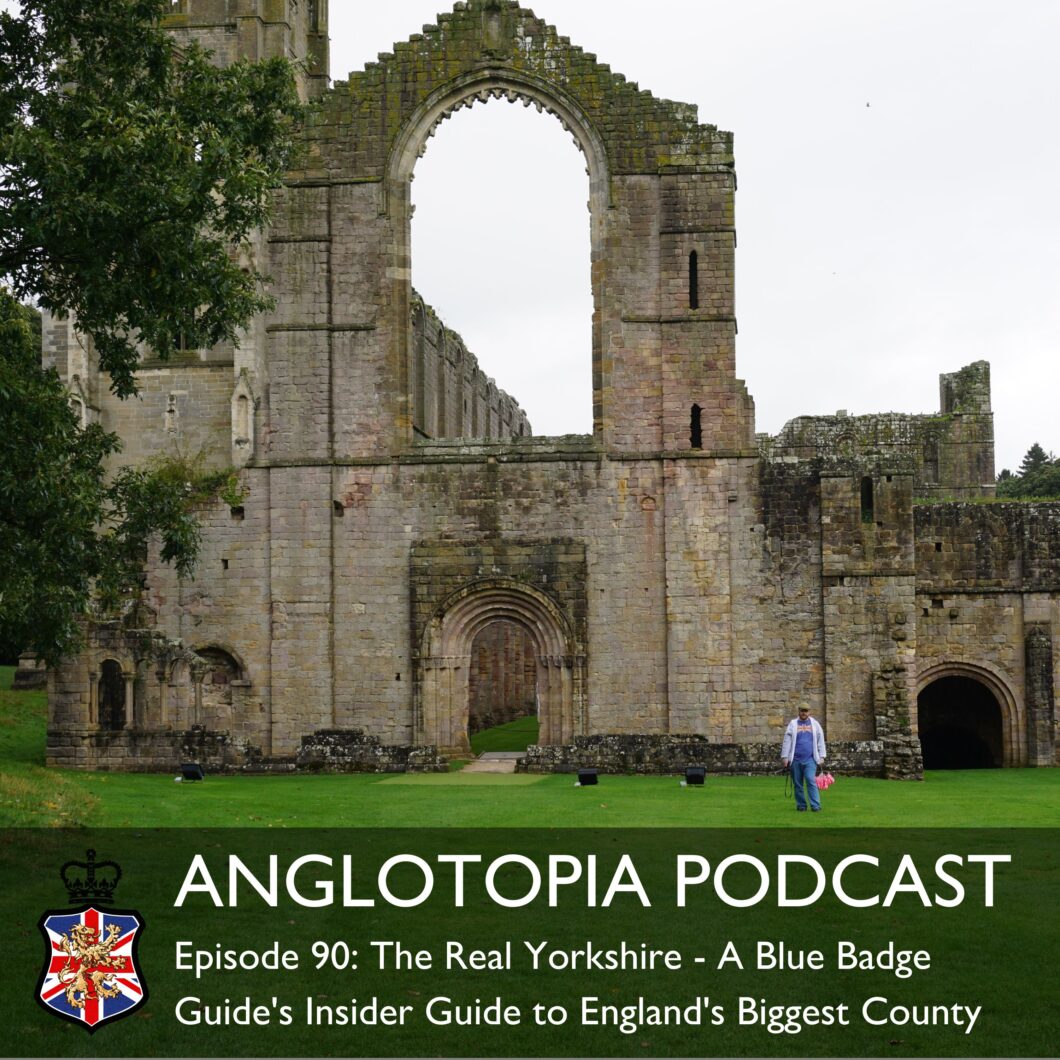
Anglotopia Podcast: Episode 90 – The Real Yorkshire – A Blue Badge Guide’s Insider Guide to England’s Biggest County

Anglotopia Podcast | Discussing UK British Travel, History, Culture, London, British Slang, and More!
Anglotopia Podcast: Episode 90 - The Real Yorkshire - A Blue Badge Guide's Insider Guide to England's Biggest County
Loading
/

In this episode of the Anglotopia Podcast, Jonathan Thomas sits down with Tim Barber, Yorkshire Blue Badge guide and founder of Real Yorkshire Tours, for an in-depth traveler’s guide to one of England’s most captivating and varied regions. Tim brings over a decade of guiding experience and a background in geography, geology, and marketing to the conversation, explaining why Yorkshire — at 6,000 square miles — deserves far more than a single day stopover between London and Edinburgh. The pair cover everything from the dramatic differences between the Yorkshire Dales and the North York Moors, to the best way to experience York Minster, to why the Yorkshire Wolds is the region’s best-kept secret. Tim also unpacks his hugely popular All Creatures Great and Small filming locations tour, explains what the Blue Badge qualification actually means for travelers, shares his personal recommendations for how many days to spend and where to stay, and offers practical advice for Americans planning their first Yorkshire adventure — including the one language misunderstanding that left him without his lunch.

Links


Takeaways

  1. The Blue Badge is the gold standard qualification for British tour guides — an 18-month course equivalent to a foundation degree, requiring practical exams, written tests, and specialist site accreditations. Always look for it when booking a guide.
  2. Yorkshire is England’s largest region at 6,000 square miles, with more landscape variety than almost anywhere else in the country — from wild Pennine moorland and rolling Dales to a hundred miles of coastline and the little-known chalk uplands of the Yorkshire Wolds.
  3. If you only have one day in the countryside, Tim recommends the Yorkshire Dales over the North York Moors — not because the Moors aren’t spectacular, but because the Dales offer slightly more varied scenery and you’ll still get a taste of moorland driving over the tops.
  4. York Minster is the largest Gothic cathedral in Northern Europe and contains 65% of all medieval stained glass in England — saved during the Civil War by a Yorkshireman who threatened his troops with death if they touched it.
  5. The All Creatures Great and Small new series has overtaken Downton Abbey in US viewing figures on PBS Masterpiece — and Tim’s filming locations tour takes in Grassington (Darrowby), Helen’s Farm, the church where James and Helen married, and more.
  6. The Yorkshire Wolds — a chalk upland area east of York — is Tim’s top hidden gem recommendation: barely known even to locals, with picture-postcard villages, chalk streams, and stunning dry valleys almost entirely free of tourists.
  7. Americans typically underestimate how much time they need in Yorkshire. Tim’s ideal recommendation is five days, covering York, the Yorkshire Dales, the North York Moors and coast, Fountains Abbey, and a stately home.
  8. York makes the best base for a Yorkshire visit, with easy rail and road access to almost every corner of the region — though Harrogate is a great alternative for those focused on the Dales and All Creatures tours.
  9. Haworth and the Brontë Parsonage offer a very different experience from the open Dales — a darkened millstone grit industrial village where Tim drives clients up onto the moorland tops so they can feel the wind and understand where Wuthering Heights came from.
  10. Jonathan is personally planning a two-to-three day Yorkshire visit after completing his Hadrian’s Wall walk this summer, and Tim recommends Helmsley, Rievaulx Abbey, and Whitby as excellent options accessible by public transport from York.

Soundbites

  1. “I won a big pitch and I just couldn’t get excited by it. I came home on Friday and said, I think I’m done. She said, well, you’re 48, you can’t retire yet — we’d better find you a job then.” — Tim on the moment he decided to leave marketing.
  2. “I take people to absolutely beautiful places, we have a traditional lunch in a country pub, they drop off at the end of the day, I get lots of thanks and a tip, I drive home and pinch myself and think — have I really been at work?” — Tim on loving his second career.
  3. “She just sort of said, I just can’t believe it. It’s more beautiful than I ever thought it would be. To see a reaction like that, where the landscape had created that kind of emotion — that’s a pretty special thing.” — Tim on a lifelong James Herriot fan finally seeing the Dales.
  4. “The history of York is the history of England. You can actually do it all on foot. You don’t have to jump on trains or tubes. A lot of the stuff is within the city walls.” — Tim on what makes York so extraordinary.
  5. “65 % of all the medieval stained glass in England is in York Minster. Because during the Reformation, a Yorkshireman told his parliamentary troops: you do not touch York Minster, under pain of death.” — Tim on how Yorkshire saved its own history.
  6. “You’d be driving down little tiny country lanes in the Dales that are just difficult to pass on. You just couldn’t get a 55-seat coach down them.” — Tim on why the All Creatures filming locations can only be done in a small vehicle.
  7. “I knew there was a Yorkshire Terrier and I’d heard of a Yorkshire Pudding — but I can’t believe what you’ve got to offer here.” — a typical American tour operator reaction on first seeing the region, as recounted by Tim.
  8. “Yorkshire men have more call centres here than anywhere else in England because people want to talk to somebody with a trustworthy voice who tells them how it is and is honest and straightforward.” — Tim on the Yorkshire character.
  9. “She said she’d just have chips — so I booked a restaurant that did pub grub. And about quarter to twelve she said, could we pull up at this garage? She came out with a bag of crisps. And I suddenly realised I wasn’t going to get any lunch.” — Tim on the chips vs crisps language trap.
  10. “People spend five or six days in London, five or six days in Edinburgh — and they always say, I wish I’d spent longer up here. Yorkshire feels a little bit more real and authentic.” — Tim on why Americans should slow down and give Yorkshire more time.

Chapters

  • 00:00 Introduction — Jonathan introduces Tim Barber and Real Yorkshire Tours
  • 01:22 How Real Yorkshire Tours Began — A marketing career, a bottle of red wine, and a brainstorming session
  • 03:38 Marketing Meets Tour Guiding — How Tim’s professional background gave him a competitive edge
  • 04:13 What Is a Blue Badge Guide? — The qualification, what it takes to earn it, and why travellers should look for it
  • 06:10 Geography, Geology & the Yorkshire Landscape — How Tim’s degree informs every tour he gives
  • 08:10 Living in Burley in Wharfedale — The best of both worlds: Dales walks and Leeds city culture
  • 09:43 What Still Excites Tim After a Decade — People’s reactions, a James Herriot fan in tears, and the joy of the job
  • 12:54 Yorkshire’s Extraordinary Variety — Moorland, Dales, coast, chalk uplands, and thriving cities
  • 15:07 The Yorkshire Character — Straight talking, trustworthy, understated, and proud
  • 16:36 Yorkshire Dales vs North York Moors — How to choose if you only have one day
  • 19:11 York — The History of England on Foot — City walls, York Minster, Museum Gardens, and the Chapter House ceiling
  • 24:37 Yorkshire’s Best Hidden Gem — Why the Yorkshire Wolds deserves far more attention
  • 27:06 What Draws Americans to Yorkshire — TV tourism, trade shows, and fam trips that converted tour operators
  • 29:36 Yorkshire Words and Phrases — Boot vs trunk, chips vs crisps, and the story behind On Ilkla Moor Baht ‘At
  • 32:22 The All Creatures Great and Small Tour — Key filming locations, Helen’s Farm, and why coaches can’t do it properly
  • 36:39 The World of James Herriot — Thirsk, Alf Wight’s real life, Wensleydale, and Herriot Country vs new series locations
  • 38:19 Americans and Vacation Time — Why cramming doesn’t work and less is more
  • 40:49 Taking Literary Pilgrims to Haworth — The Brontës, the moorland, the Parsonage, and the new Wuthering Heights film
  • 44:01 Most Common Misconceptions — Americans who don’t realise how much history exists outside London
  • 45:33 How Many Days Should You Spend? — Tim’s ideal five-day Yorkshire itinerary
  • 47:09 Where to Stay — York vs Harrogate, and a top-end recommendation near Ripon
  • 48:26 Best Time of Year to Visit — Why April–June and September–October beat the summer crowds
  • 49:27 Jonathan’s Personal Yorkshire Plans — Post Hadrian’s Wall tips for travelling without a car
  • 51:00 Tim’s Recommendations for a Carless Visitor — Helmsley, Rievaulx Abbey, Whitby, and the North Yorkshire Moors Railway
  • 53:01 The North Yorkshire Moors Railway — Pickering’s Downton Abbey connection and medieval church paintings
  • 54:08 Castle Howard — Brideshead Revisited, Bridgerton, and getting there from York
  • 54:54 Wrap-Up — Jonathan’s outro, Friends of Anglotopia, and a call to slow down and explore Yorkshire properly

Video Version

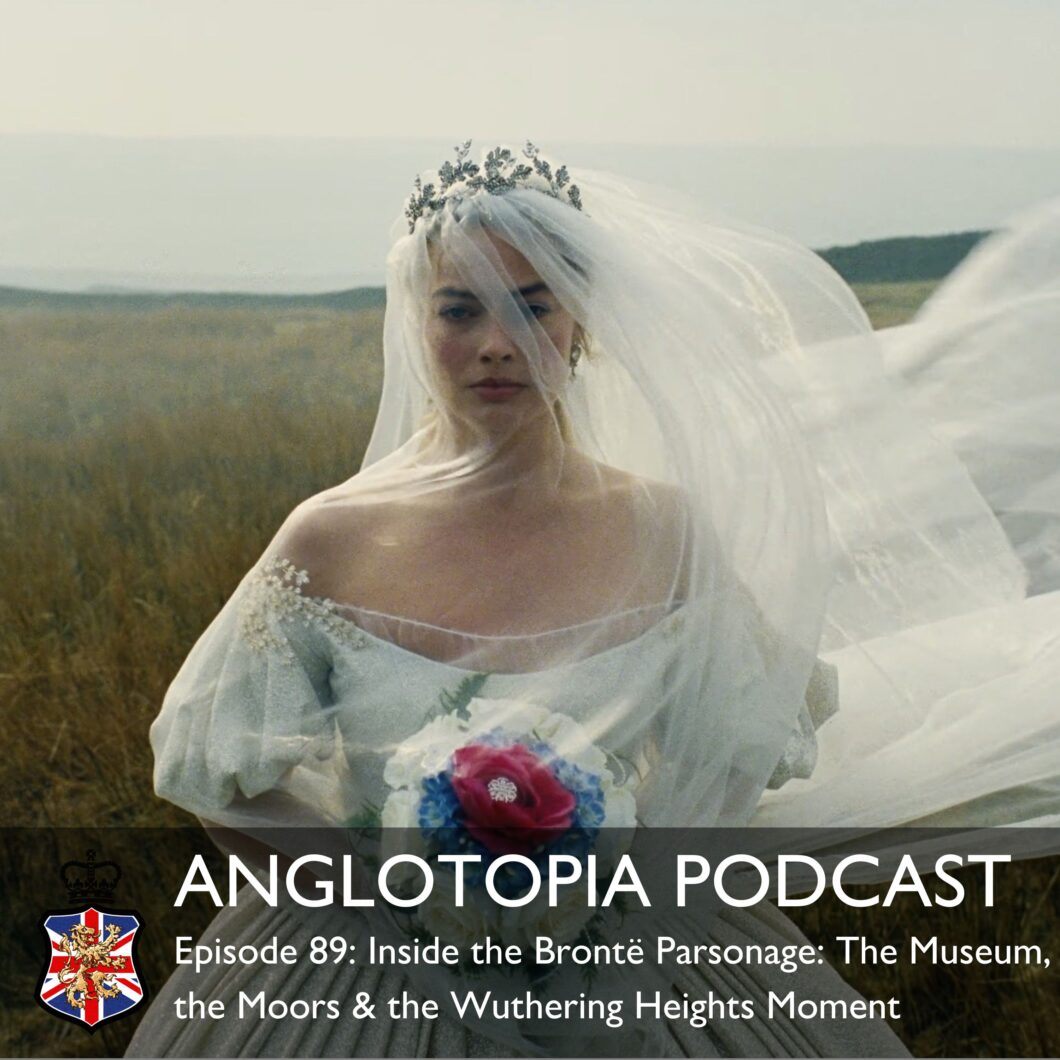
Anglotopia Podcast: Episode 89 – Inside the Brontë Parsonage – The Museum, the Moors & the Wuthering Heights Moment

Anglotopia Podcast | Discussing UK British Travel, History, Culture, London, British Slang, and More!
Anglotopia Podcast: Episode 89 - Inside the Brontë Parsonage - The Museum, the Moors & the Wuthering Heights Moment
Loading
/

In this episode of the Anglotopia Podcast, Jonathan Thomas is joined by Mia Ferullo, Digital Engagement Officer, and Sam, Programme Officer at the Brontë Parsonage Museum in Haworth, Yorkshire — and co-hosts of the museum’s own acclaimed podcast, Behind the Glass: A Parsonage Podcast. Together they explore what makes the Parsonage one of Britain’s most atmospheric and emotionally resonant literary destinations, from the world’s largest collection of Brontë artefacts to the wild moorland that inspired the novels themselves. The conversation spans the remarkable story of three sisters who published against the odds under male pseudonyms, the often-overlooked legacy of Anne Brontë and patriarch Patrick Brontë, the concept and standout episodes of Behind the Glass, and the swirling cultural moment around Emerald Fennell’s new big-screen adaptation of Wuthering Heights starring Margot Robbie and Jacob Elordi. Mia and Sam also share practical advice for American Anglophiles planning their first visit to Haworth, including the best time of year to go and how to get there.

Links

Takeaways

  • The Brontë Parsonage Museum in Haworth is home to the world’s largest collection of Brontë artefacts, including handwritten manuscripts, first editions, writing desks, and extraordinary miniature books the sisters made as children.
  • Almost everything on display in the Parsonage is genuine Brontë furniture and objects — not set dressing — making it one of the most authentically preserved literary homes in Britain.
  • The Brontë sisters published their novels under male pseudonyms not just for anonymity, but to avoid the prejudice that would have greeted female authors — and the books were still considered shocking and coarse when they appeared.
  • Anne Brontë is widely regarded as the most overlooked of the three sisters, lacking the pop culture adaptations and name recognition that Jane Eyre and Wuthering Heights have accumulated over generations.
  • Patrick Brontë, often cast as a footnote or even a villain in the family story, played a significant role in his daughters’ development — educating them in the classics and sparking their imaginative lives by bringing home a set of toy soldiers for Branwell.
  • Behind the Glass: A Parsonage Podcast invites guests to choose a single object from the collection as a jumping-off point, allowing deep dives into rarely seen items — including Charlotte’s tea cosy and its fascinating gendered history.
  • Emerald Fennell’s new Wuthering Heights film has driven a surge of visitors to the museum, with people noting in the visitor book that the film brought them to Haworth for the first time.
  • Controversy around Wuthering Heights is nothing new — the original 1847 novel was condemned as vulgar and depraved by contemporary reviewers, making modern critical debate very much in keeping with Emily Brontë’s legacy.
  • A new television adaptation of Jane Eyre has been announced, which the museum is already looking ahead to as potentially another major cultural moment.
  • August is the best month to visit Haworth when the heather is in full purple bloom on the moors, though autumn’s fog and mist give the village an irresistibly gothic atmosphere perfect for Brontë fans.

Soundbites

  • “When you go up behind the Parsonage, you’ve got the moorlands. There’s the ruin of Top Withens up there, supposed to be the influence for Wuthering Heights. You feel like you can really step into the pages of the book.” — Sam on Haworth’s atmospheric setting.
  • “There are moments where you think, gosh, this all started here where I work, and I’m there every day. They actually wrote Jane Eyre and Wuthering Heights in this room, on this writing desk.” — Mia on the weight of working at the Parsonage.
  • “The writing desks contain all the same materials the Brontës left in them. Everything’s been preserved exactly as it was when they died.” — Mia on her favourite objects in the collection.
  • “It’s believed that Emily died on the sofa. And I think that’s something people find very moving — especially when they’ve come from abroad, because Haworth isn’t easy to get to even if you live in the UK.” — Sam on emotional moments with visitors.
  • “They had to use pseudonyms so nobody would know who they were, and there’d be no prejudice against them being women writers. And still the books were called coarse and shocking — people thought women shouldn’t even be reading them.” — Mia on the Brontës publishing against the odds.
  • “I think Anne definitely gets overlooked. Jane Eyre and Wuthering Heights have very much become part of pop culture — there are more movies, more adaptations, pop songs written about them. Anne doesn’t get that same exposure.” — Sam on the most neglected Brontë sister.
  • “You can almost compare the Brontës to Shakespeare — how his work is reinterpreted in different settings and time periods. That’s why the Brontës’ work is so timeless. You can draw on certain elements and themes and keep it fresh.” — Sam on why new adaptations keep coming.
  • “We never really want to tell visitors what to think. We want people to read the books and make their own minds up.” — Mia on the museum’s approach to literary interpretation.
  • “I don’t think we expected it to be quite as big as it was. Seeing all the money that went into the premieres and the marketing — we’ve just been wanting to grab a bit of everything to remember it, because how often does something like this come along?” — Sam on the scale of the Wuthering Heights film moment.
  • “It just came from this little house in this little village in Yorkshire.” — Sam on the extraordinary global legacy of the Brontë Parsonage.

Chapters

  • 00:00 Introduction — Jonathan sets the scene at the Brontë Parsonage Museum and introduces Mia and Sam
  • 01:39 What Is the Brontë Parsonage Museum? — Location, atmosphere, and what to expect from a visit
  • 03:21 Mia’s Role as Digital Engagement Officer — Social media, digital content, and the podcast
  • 04:07 Sam’s Role as Programme Officer — Events, workshops, live music, and how she joined the podcast
  • 05:18 The Collection — Manuscripts, miniature books, writing desks, and authentic Brontë artefacts
  • 06:47 The Weight of the Place — Favourite objects and emotional moments on the job
  • 09:50 Behind the Glass Podcast — The format, concept, and how objects anchor each episode
  • 10:52 Standout Episodes — Holly Ringland, Charlotte’s tea cosy, and the gendered history of everyday items
  • 12:43 Who’s Listening — Reaching new audiences and the American visitors who came because of the podcast
  • 14:13 The Brontës for Newcomers — Why the sisters matter and what made their achievement so remarkable
  • 15:52 Honouring Each Sister Individually — How the museum balances Charlotte, Emily, and Anne
  • 17:51 The Most Overlooked Brontë — Why Anne deserves more attention
  • 18:50 Patrick Brontë — His real role in the family and his presence throughout the house
  • 20:28 The Moors and the Novels — How the landscape shapes the reader’s understanding of the books
  • 21:53 The Wuthering Heights Film Moment — The mood at the museum as the Emerald Fennell adaptation lands
  • 23:16 Have They Seen the Film? — Mia and Sam’s reactions, and the Charli XCX album recommendation
  • 23:45 Is It a Good Adaptation? — Discussing Fennell’s personal interpretation versus fidelity to the novel
  • 26:21 Misreading Wuthering Heights — The novel’s darkness and moral complexity versus its romance reputation
  • 27:10 A Long History of Controversy — Why provoking critics is part of Emily Brontë’s legacy
  • 27:35 Do Adaptations Drive Visitors? — The film’s impact and the newly announced Jane Eyre series
  • 28:41 Jane Eyre Nostalgia — Jonathan’s favourite adaptation and a digression into Wide Sargasso Sea
  • 29:38 How to Pronounce Haworth — And why British place names are endlessly confusing
  • 30:06 Practical Tips for Visiting — What to expect, how busy it gets, and wear good shoes
  • 31:24 Getting There from London — Trains, connections, and the steam railway from Keighley
  • 32:00 Make a Week of It — Combining Haworth with York, Manchester, and the Yorkshire Moors
  • 32:53 Best Time of Year to Visit — August heather, autumn mist, and gothic atmosphere
  • 33:34 The Literary Gothic Trail — Adding Whitby to a Yorkshire literary itinerary
  • 34:12 What’s Coming Up at the Museum — Hair jewellery workshops, live music at Easter, and upcoming events
  • 35:12 Wrap-Up — Jonathan’s outro, Friends of Anglotopia, and a recommendation to pick up Wuthering Heights

Video Version

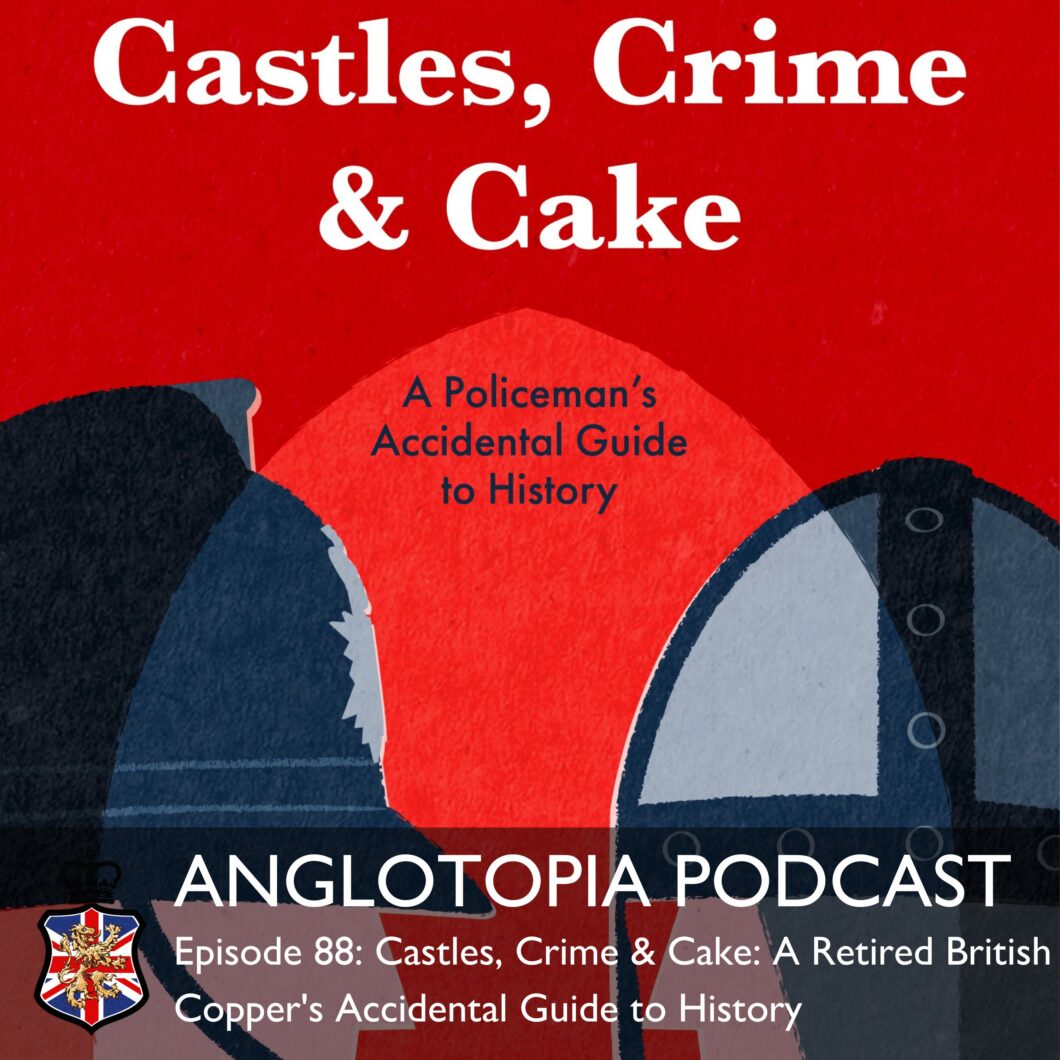
Anglotopia Podcast: Episode 88 – Castles, Crime & Cake – A Retired British Copper’s Accidental Guide to History

Anglotopia Podcast | Discussing UK British Travel, History, Culture, London, British Slang, and More!
Anglotopia Podcast: Episode 88 - Castles, Crime & Cake - A Retired British Copper's Accidental Guide to History
Loading
/

In this episode of the Anglotopia Podcast, host Jonathan Thomas sits down with retired British police officer, military veteran, and author John Donoghue to discuss his remarkable journey from the Royal Navy and British Army to 40 years in the police — and then, in retirement, accidentally becoming a castle guide at Pembroke Castle in Wales. John’s new book, *Castles, Crime and Cake: A Policeman’s Accidental Guide to History*, blends laugh-out-loud stories from the beat with medieval history, bizarre forgotten British laws, and surprisingly profound reflections on finding purpose in later life. Along the way, Jonathan and John explore how British policing differs from American policing, the absurdity of some 999 emergency calls, what it means to police without firearms, the infamous Salmon Act of 1986, and the ghost of a murderous monkey haunting a Welsh castle.

Links

Takeaways

  • John Donoghue served in the Royal Navy, British Army, and police across a 40-year career before retiring to become an accidental castle guide.
  • British police operate without firearms in most situations, relying instead on communication, humor, and patience to defuse confrontations.
  • The UK has 43 regional police forces, each covering a defined geographic area and handling all crimes within it — unlike America’s layered federal, state, and local system.
  • “Policing by consent” means British officers see themselves as part of the community, earning authority through trust rather than force.
  • The 999 emergency line receives some truly baffling calls — including reports of stolen snowmen, dogs looking at people funny, and complaints about McDonald’s breakfast hours.
  • John accidentally became a Pembroke Castle guide after sending a CV that included a photo of his dog eating birthday cake — and still got the job.
  • The Obscure Crime Preservation Society (membership: two, including Jonathan) was founded to highlight Britain’s forgotten and bizarre laws still on the statute books.
  • The Salmon Act of 1986 makes it illegal to handle a salmon in suspicious circumstances — and John tried to get himself arrested under it.
  • Police humor and dark comedy are genuine coping mechanisms for officers exposed to high levels of trauma and PTSD.
  • The biggest life lesson John took from policing: approach everything with a sense of humor — it won’t always work, but it’s the best tool you have.

Soundbites

  • “I could either go to university like my brothers had, or do something more exciting. For me it was a choice between more schoolwork or a life of adventure — so I chose the latter.” — John on why he joined the Royal Navy at 18.
  • “I thought, what other job would you have where a dog comes into the room and just does a poo and nobody says a word? So I thought, I’ve got to start writing these stories down.” — John on the incident that convinced him to write his police memoirs.
  • “I’ve been punched, kicked, had broken bones, been stabbed in the face, put in hospital. That’s the downside — but we don’t carry guns because our public don’t carry guns.” — John on the realities of unarmed policing.
  • “We police because the community wants itself to be kept safe and kept lawful. We don’t do it with a heavy hand — talk first, and then force if needs be. Not the other way around.” — John explaining policing by consent.
  • “My CV basically consisted of: I can navigate a warship, I can shoot the enemy, and I can arrest baddies. So I thought it’s not a great CV.” — John on applying to work at Pembroke Castle.
  • “I want it to be like the best tour since Willy Wonka’s tour of his factory — but with maybe less deaths.” — John on his approach to castle guiding.
  • “Women can’t eat chocolate on a bus. You can’t wear armour in the House of Commons. You’re not allowed to be drunk in a pub. These laws are still on the statute books.” — John listing Britain’s strangest surviving laws.
  • “The fishmonger asked if I wanted him gutted — but to be honest, he looked gutted enough already.” — John on acquiring Steve the salmon for his Salmon Act experiment.
  • “Every contact leaves a trace — like fingerprints and DNA. And just the same, every contact leaves a trace on your soul. All that negativity can have an effect on you.” — John on the psychological toll of policing.
  • “I don’t know where they could have parked — it’s double yellow lines outside.” — A robbery victim’s response moments after an armed raid, which John recalls as a reminder that hope is always the last thing left.

Chapters

  • 00:00 Welcome & Introduction — Jonathan introduces John Donoghue and his new book
  • 01:42 A Life of Service — From the Royal Navy to the British Army to the police
  • 03:10 Writing the Police Memoirs — How bizarre incidents on the job inspired John to write
  • 06:33 The Bravery Commendation — Rescuing a family (and their pets) from a house fire
  • 07:50 Police Humor & the Women’s Institute — Writing for a general audience
  • 09:34 British vs. American Policing — Core similarities and key differences
  • 10:51 Policing Without Firearms — What it’s really like to work unarmed
  • 12:45 Rank Structure Explained — What a PC is, and how it compares to American officers
  • 13:44 How UK Police Forces Are Organized — 43 forces, one geographic system
  • 15:39 Absurd 999 Calls — Stolen snowmen, dog stares, and McDonald’s complaints
  • 17:52 Policing by Consent — What it means in everyday practice
  • 19:31 British Police Jargon Decoded — Response officers, custody suites, and more
  • 20:11 Becoming an Accidental Castle Guide — The CV, the dog photo, and the job offer
  • 23:31 The Crime Preservation Society — Breaking Britain’s forgotten laws
  • 25:25 The Salmon Act of 1986 — Handling Steve the salmon in suspicious circumstances
  • 27:28 More Bizarre British Laws — Armour, top hats, chocolate, and convicted Egyptians
  • 29:38 Obscure Laws in Police Training — What they never taught at the academy
  • 30:22 Pembroke Castle — History, Henry VII, and why it’s never been taken by force
  • 31:45 The Monkey Ghost — A Welsh castle’s most unusual haunting
  • 34:20 Police Skills Meet Castle Tours — Crowd control, hecklers, and bored teenagers
  • 36:01 Strangest Tourist Questions — Railway lines, castle roofs, and knight nurses
  • 37:03 Getting Banned by a Police Force — How the books opened and closed doors
  • 38:28 The Biggest Life Lesson from Policing — Humor, hope, and the Pandora’s Box story
  • 41:41 What’s Next — Jesters, Roland the Farter, and no writing projects yet
  • 43:37 Wrap-Up — Book details and how to find John’s work

Video Version

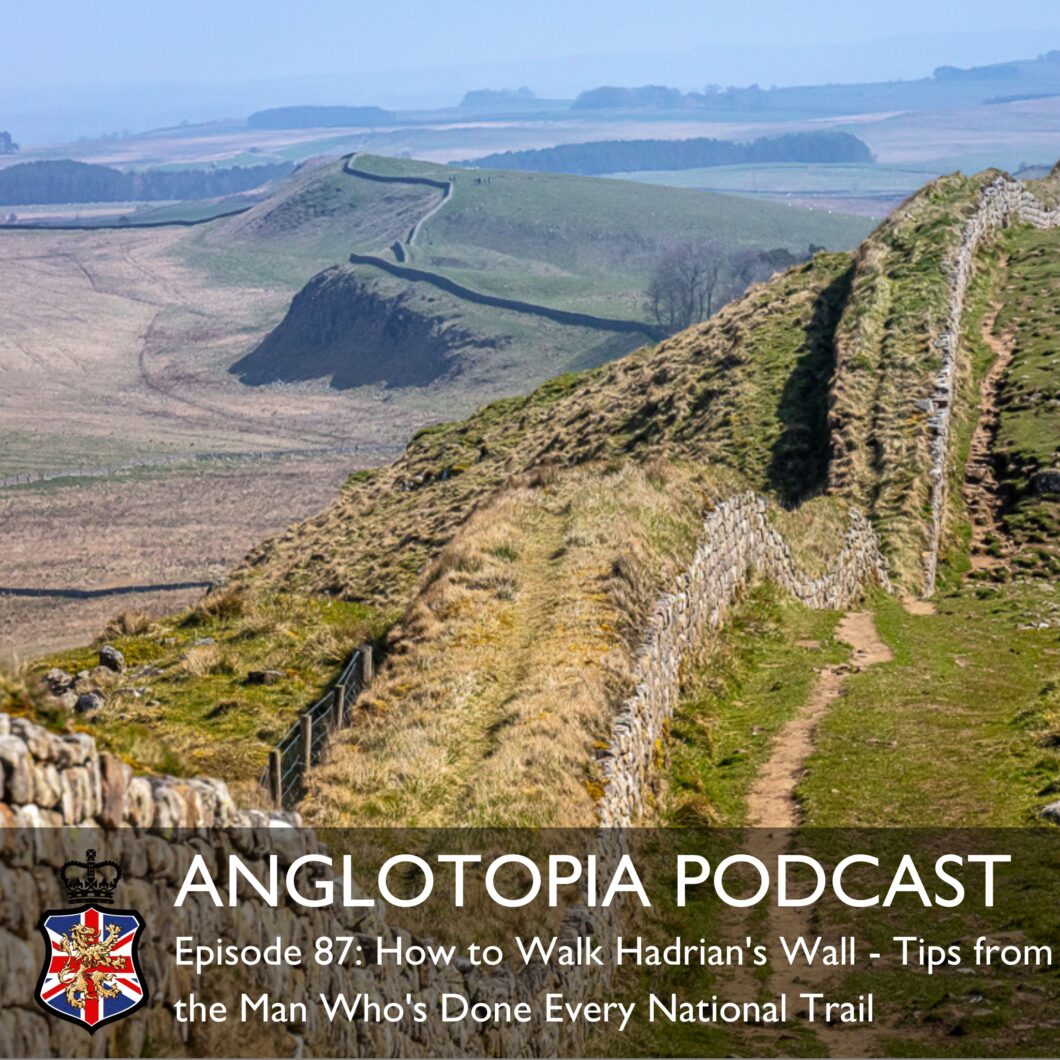
Anglotopia Podcast: Episode 87 – How to Walk Hadrian’s Wall – Tips from the Man Who’s Done Every National Trail

Anglotopia Podcast | Discussing UK British Travel, History, Culture, London, British Slang, and More!
Anglotopia Podcast: Episode 87 - How to Walk Hadrian's Wall - Tips from the Man Who's Done Every National Trail
Loading
/

In this episode of the Anglotopia podcast, host Jonathan Thomas welcomes back photographer and adventurer Quintin Lake to discuss the Hadrian’s Wall National Trail. They explore Quintin’s experiences walking the trail, its historical significance, the unique landscapes, and the challenges of photography along the route. The conversation also touches on memorable moments, iconic sites, and practical advice for those planning to walk the trail themselves.

Links

Quintin Lake:

Hadrian’s Wall Resources:

Takeaways

  • Quintin Lake has walked all 16 of Britain’s national trails.
  • Hadrian’s Wall is a unique trail steeped in Roman history.
  • The trail offers a rich experience with museums and historical sites.
  • Walking the trail can be both contemplative and physically challenging.
  • The landscape varies from flat agricultural land to rugged moorland.
  • Photography along the wall requires attention to light and distance.
  • The best time for photography is during golden hours.
  • Planning for resupply is crucial when walking the trail.
  • Memorable moments often come from unexpected encounters with history.
  • The experience of walking connects you to the past in profound ways.

Soundbites

  • “It’s more like walking an idea than walking a trail. You’re in the Roman world from beginning to end and that’s really exciting.” — Quintin on what makes Hadrian’s Wall unique among all 16 national trails.
  • “I kind of thought it’d be a bunch of old stones and after half a day I would have had enough. But actually it was so rich and deep and they’re all different. It’s way more fascinating than I thought.” — Quintin on being surprised by the wall’s depth.
  • “There were these huge blocks of stone with Roman drill holes where they’ve tried to wedge them apart. And they’ve clearly given up. That was the moment I felt most connected to history on the journey.” — Quintin on finding abandoned Roman quarrying at Limestone Corner.
  • “The notes they’re writing home were things like, ‘Please send me new socks.’ It’s very domestic stuff — saying how boring it is, how wet it is. They’re looking forward to seeing their wives.” — Quintin on the Vindolanda tablets.
  • “I remember as a young man seeing it as quite a small tree and then seeing it again as a full tree. It’s like a measure of one’s own life, and then to see it so senselessly cut down.” — Quintin on the Sycamore Gap tree.
  • “Newcastle is such an extraordinary fantastic city. It’s a better place to celebrate at the end — amazing restaurants, the Tyne, the bridges.” — Quintin on why to walk west to east.
  • “If you think you can wing it and buy food and provisions along the way, you won’t. It’s really difficult for resupply.” — Quintin’s practical warning for walkers.
  • “I slept in the ditch itself just to get out of the wind. It was a bit stealthy, sneaky, beaky, but it kind of added to the sense of mischief — the history of raiding Scots and border reavers.” — Quintin on wild camping along the wall.
  • “The biggest unexpected thrill was the views. You can see the Lake District mountains, the North Pennines, the hills of southern Scotland. It’s like a pivot point between separate worlds.” — Quintin on the panoramic surprise of the central section.
  • “You imagine seeing a famous monument and you wonder, is it going to be as amazing as the postcards? And when it is, that was truly tremendous.” — Quintin on first seeing the iconic wall winding across the Whin Sill.

Chapters

  • 00:00 Revisiting the Journey
  • 01:42 Exploring Hadrian’s Wall National Trail
  • 04:35 Walking Experience and Contemplation
  • 07:28 Logistics and Planning for the Walk
  • 10:40 Historical Significance of Hadrian’s Wall
  • 13:44 Landscape and Weather on the Trail
  • 16:36 Unexpected Discoveries Along the Wall
  • 19:59 Connecting Through Mundanity
  • 20:19 Memorable Moments on Hadrian’s Wall
  • 23:31 The Impact of Nature and Change
  • 24:10 Challenges of Photography on the Trail
  • 27:32 Capturing Iconic Landscapes
  • 29:00 The Experience of Wild Camping
  • 30:34 The Hardest Days on the Trail
  • 31:48 Post-Walk Recovery and Exploration
  • 34:02 Impressions of Roman Sites
  • 35:56 Unexpected Historical Richness
  • 38:30 Planning for Provisions
  • 42:14 Future Adventures in the Mountains
  • 44:08 anglotopia-podcast-outro.mp4

Video Version

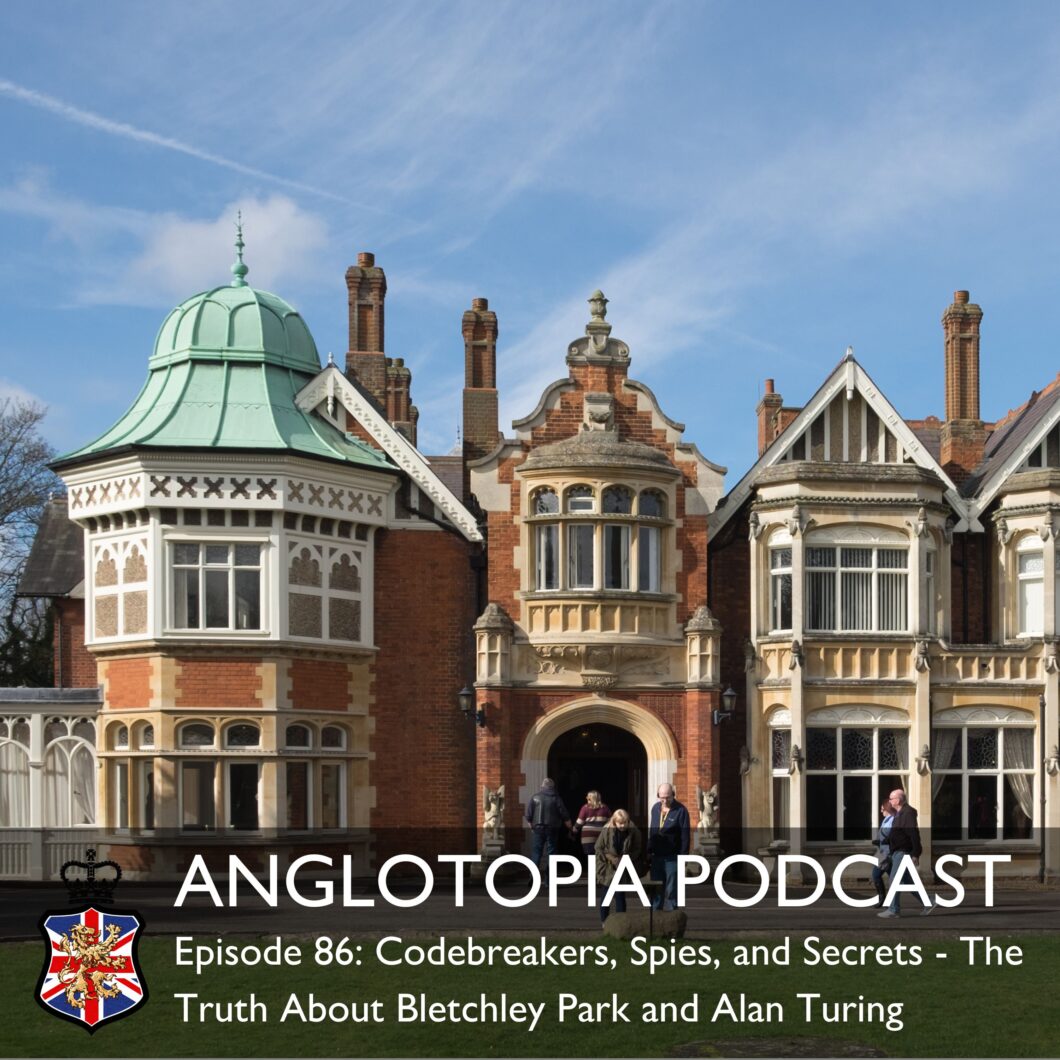
Anglotopia Podcast: Episode 86: Codebreakers, Spies, and Secrets – The Truth About Bletchley Park and Alan Turing

Anglotopia Podcast | Discussing UK British Travel, History, Culture, London, British Slang, and More!
Anglotopia Podcast: Episode 86: Codebreakers, Spies, and Secrets - The Truth About Bletchley Park and Alan Turing
Loading
/

This episode of the Anglotopia Podcast delves into the hidden history of Bletchley Park, exploring its origins, growth, and the significant role it played during World War II. Dr. Chris Smith joins us to discuss the secrecy surrounding the operations, the organizational structure, and the cryptanalysis processes that led to the breaking of the Enigma code. The discussion also highlights the impact of Bletchley Park’s intelligence on military operations, the social dynamics and gender roles within the workforce, and the legacy of this crucial establishment in British history. We also unpack some of the myths around Bletchley Park, Alan Turing, and the development of the first computers.

Links

Takeaways

  • Bletchley Park grew rapidly due to the demands of war.
  • The workforce at Bletchley Park was predominantly women.
  • Secrecy was maintained through strict measures and the Official Secrets Act.
  • Bletchley Park’s structure was organized into specialized huts for efficiency.
  • The Enigma machine was a complex cipher system with vulnerabilities.
  • Intelligence from Bletchley Park significantly influenced military strategies.
  • Alan Turing’s contributions were pivotal but not the sole focus of Bletchley Park’s success.
  • The legacy of Bletchley Park continues to be relevant in discussions of intelligence and secrecy.
  • Social dynamics at Bletchley Park reflected broader class and gender issues in British society.
  • Bletchley Park is now a museum, preserving its history and contributions.

Sound Bites

  • “Churchill says that Bletchley is his goose which lays these golden eggs and never cackles. Well, actually some of them did cackle, but on the whole it’s a remarkable feat that they kept it as secret as they did.” — Chris on the limits of wartime secrecy.
  • “If you wanted to produce an accurate movie about Bletchley Park, it would probably be a woman working on a typewriter for ten hours a day. That doesn’t produce a very interesting narrative for the audience.” — Chris on Hollywood vs. reality.
  • “159 quintillion possible settings. If you tried to brute force this one letter at a time, that period of time is longer in seconds than the universe has existed.” — Chris on the power of Enigma.
  • “Enigma can never encipher a letter into itself. You can press A 26 times and you’ll never get A again. That’s an inherent weakness.” — Chris on how the unbreakable code was broken.
  • “The person who sort of handed them the Official Secrets Act had a gun on the table. The implication was that if you break this secret, this could carry the death penalty.” — Chris on how secrecy was enforced.
  • “The British basically sell Enigma machines to other countries after the war but just don’t tell them that they can break them. That’s a big reason it stayed secret.” — Chris on why the secret lasted until 1974.
  • “There’s this idea that Bletchley is a meritocracy, but it isn’t. This is a very middle class institution.” — Chris on class at Bletchley Park.
  • “Alan Turing would chain his mug to his radiator. He’d ride his bicycle wearing a government-issued gas mask because of his hay fever. He’s quite an odd guy, but obviously very brilliant.” — Chris on the real Turing.
  • “They actually invent a fictional spy called Boniface working in the German high command. Every time they talked about ultra intelligence, they attributed it to Boniface.” — Chris on how they disguised their source.
  • “The Bletchley Park Trust rescued this place from the jaws of destruction at the hands of property developers. They were going to knock it all down and make way for housing.” — Chris on how close we came to losing Bletchley Park.

Chapters

  • 00:00 Introduction to Bletchley Park
  • 02:02 The Role of Bletchley Park in WWII
  • 03:20 Choosing Bletchley Park: Strategic Decisions
  • 06:13 The Growth of Bletchley Park
  • 11:08 Maintaining Secrecy at Bletchley Park
  • 15:58 The Structure and Organization of Bletchley Park
  • 20:35 Understanding Codes: Enigma and Beyond
  • 25:35 Utilizing Intelligence: The Process at Bletchley Park
  • 34:01 The Legacy of Bletchley Park’s Secrets
  • 01:00:36 anglotopia-podcast-outro.mp4

Video Version