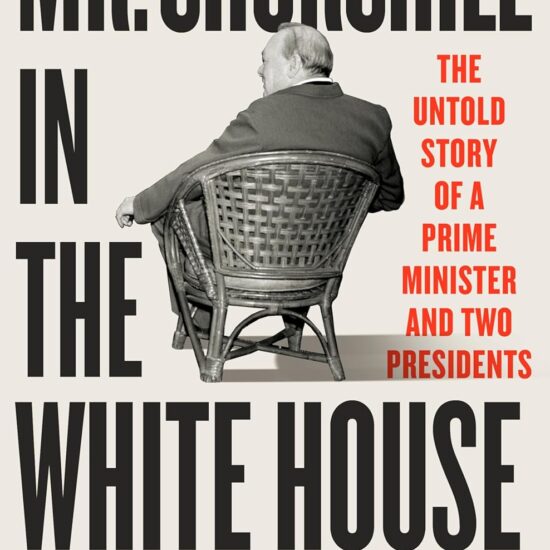
Winston Churchill remains one of history’s most studied, most quoted, and most mythologized figures. But how much of what we think we know about him is actually true? The legends surrounding Britain’s wartime leader range from inspiring to troubling—and separating fact from fiction requires careful examination.
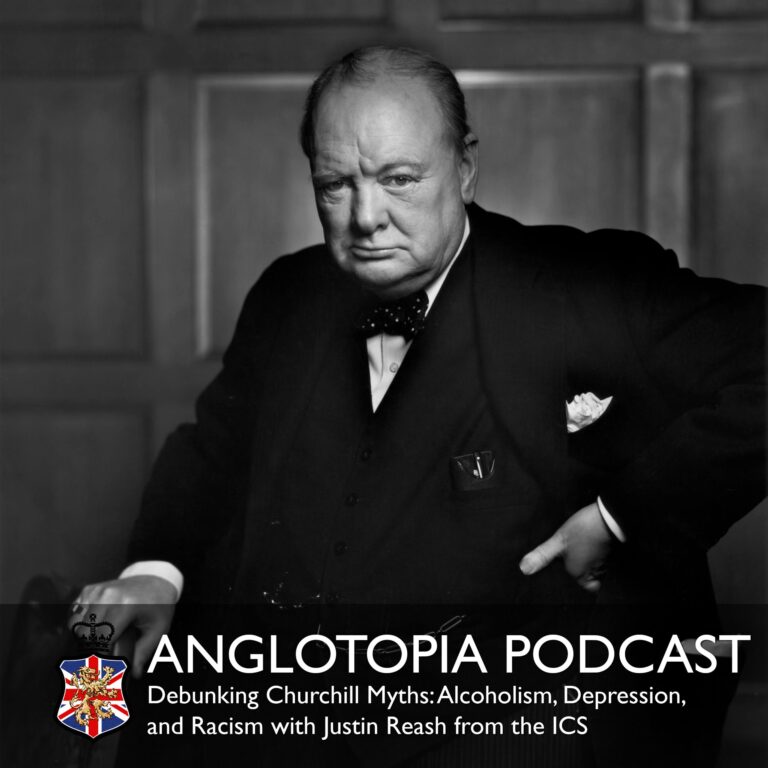
In this episode of the Anglotopia Podcast, host Jonathan Thomas speaks with Justin Reash, formerly Executive Director of the International Churchill Society (ICS), to examine some of the most persistent myths about Churchill: his alleged alcoholism, his supposed depression, and accusations of racism. The conversation reveals a more complex figure than either hagiography or condemnation allows.
The Alcoholism Question
Churchill’s fondness for alcohol is legendary. He famously quipped that he had taken more out of alcohol than alcohol had taken out of him. Photographs show him with glass or bottle in hand. His wine bills were substantial. So was he an alcoholic?
Justin argues the evidence doesn’t support that conclusion. Churchill drank throughout his long day—starting with weak whisky and water at breakfast, continuing through lunch, afternoon, and dinner. But his consumption was spread across many hours, and contemporary accounts consistently describe him as clear-headed and functional.
The key distinction is between heavy drinking and alcoholism. Churchill could and did drink significant quantities without apparent impairment to his work or judgment. He never showed the compulsive behavior, the loss of control, or the physical dependence that characterize alcohol use disorder. He was, by modern standards, a heavy social drinker operating in an era when such consumption was unremarkable among his class.
The myth persists partly because it makes a good story and partly because Churchill himself cultivated it. He enjoyed his reputation as a bon vivant. But those who worked most closely with him—his secretaries, his generals, his political colleagues—consistently reported that his drinking never interfered with his legendary work capacity.
The “Black Dog” of Depression
Churchill famously referred to his “black dog”—supposedly his term for periods of depression. This has been elaborated over the decades into a narrative of clinical depression that Churchill battled throughout his life, sometimes presented as explaining both his dark moods and his remarkable energy.
The historical record is more complicated. Churchill did use the phrase “black dog,” though not as frequently as legend suggests. He certainly experienced periods of low mood, particularly during setbacks in his political career. But did he suffer from clinical depression in the medical sense?
Justin suggests caution. Retrospective diagnosis is notoriously unreliable. Churchill never received a contemporary diagnosis of depression, and his behavior doesn’t consistently match the clinical picture. He was capable of sustained productivity even during difficult periods. His “black dog” may have been what we’d now call situational low mood rather than a depressive disorder.
The depression narrative serves various purposes. It makes Churchill more relatable—even great figures struggle. It potentially explains both his understanding of despair and his determination to fight it. But it may also medicalize what was, in Churchill’s time, simply recognized as the normal ups and downs of a temperamental personality.
Confronting the Racism Question
The most contentious issue is Churchill’s views on race. Critics point to statements and policies that appear deeply racist by modern standards—his comments about Indians, his handling of the Bengal famine, his views on empire and colonialism.
Justin doesn’t shy away from the difficulty. Churchill was a man of his time and class, and that time and class held views on race and empire that are indefensible today. He made statements that cause genuine pain. His policies as a colonial administrator and wartime leader had devastating effects on non-white populations.
At the same time, context matters. Churchill’s views were not unusual among British politicians of his generation. His comments must be read against a background of assumptions that pervaded British society. This doesn’t excuse them, but it helps explain them.
Moreover, Churchill’s record includes elements that complicate the racist characterization. He was an early opponent of Nazism partly because of its racial ideology. He worked alongside colleagues from across the Commonwealth during the war. His views evolved over his long life, though not as far or as fast as we might wish.
The honest assessment: Churchill held racist views that caused real harm. These coexist with his achievements in opposing Nazi tyranny. Both are part of the historical record.
The International Churchill Society
The ICS works to promote understanding of Churchill’s life and legacy through education, publications, and events. Justin describes the organization’s annual conference, which brings together scholars, enthusiasts, and descendants of those who knew Churchill.
The Society maintains a scholarly commitment to accuracy. That means acknowledging uncomfortable truths alongside celebrating achievements. Churchill doesn’t need defending from legitimate criticism—his record can withstand honest examination.
For those interested in deepening their understanding of Churchill, the ICS offers resources ranging from academic journals to accessible introductions. The goal is engagement with the actual historical figure, not perpetuation of myth in either direction.
Why Accuracy Matters
Getting Churchill right matters because he remains a reference point in contemporary debates. Politicians invoke his example. Writers draw lessons from his leadership. His words appear on motivational posters and in graduation speeches.
When these invocations rest on myth rather than history, they lose their power. An alcoholic Churchill who somehow functioned despite his disease is less instructive than a heavy drinker who chose how and when to indulge. A clinically depressed Churchill who overcame mental illness differs from a temperamental man who experienced normal mood variations.
Similarly, confronting Churchill’s racism honestly enables more meaningful conversation than either denial or reduction of his entire legacy to that single dimension. History’s lessons require history’s accuracy.
Engaging with Complexity
Justin encourages listeners to read widely about Churchill—not just the admiring biographies but the critical assessments as well. Primary sources, including Churchill’s own voluminous writings, reward attention. The man who emerges from serious study is more interesting than any cardboard hero.
Churchill’s achievement was real: leading Britain through its darkest hour, rallying a nation with his words, refusing to accept defeat when logic suggested acceptance. His flaws were equally real: blind spots about empire, sometimes poor judgment, views we now recognize as harmful.
Holding both truths simultaneously isn’t weakness—it’s maturity. The past contains people who did great things and terrible things, sometimes the same people. Learning from history means grappling with that complexity.
—
Want to hear more about separating Churchill fact from fiction? Listen to the full episode of the Anglotopia Podcast wherever you get your podcasts.
The Anglotopia Podcast is your deep dive into the rich and diverse world of British culture, hosted by Jonathan and Jacqueline Thomas, publishers of Anglotopia.net and Londontopia.net. Each episode takes you on a journey through iconic British television, captivating historical events, and essential travel tips, ensuring you experience the very best of the British Isles. Our engaging discussions feature important British guests and authors, covering everything from the latest trends and timeless traditions to hidden gems and popular landmarks. Whether you’re a passionate Anglophile or simply curious about the UK, our podcast offers a delightful mix of insights and entertainment. Join us as we celebrate the charm, heritage, and unique allure of Britain, making every episode a must-listen for anyone who loves all things British.
This week, we will talk about Sir Winston Churchill, the myths about him, and the upcoming Churchill conference in London with Justin Reash. Justin is the executive director of the International Churchill Society, and we discuss the work of the society and the upcoming International Churchill Conference. The society aims to keep the memory and legacy of Winston Churchill alive by promoting the values he embodied, such as freedom, democracy, and human rights. They achieve this through publications, events, and educational initiatives. The annual conference is a significant source of engagement, bringing together sponsors, attendees, and speakers to discuss Churchill’s historical context and relevance today. Justin shares his favorite Churchill quotes, anecdotes, and recommends books and movies about Churchill. In this conversation, Justin Reash discusses some of the myths and misinformation surrounding Winston Churchill. He debunks the idea that Churchill was an alcoholic or clinically depressive and explains that Churchill’s use of the term ‘race’ was not indicative of racism. Reash also expresses frustration with the reductive conversations and cherry-picking of quotes that often occur when discussing Churchill. He emphasizes the importance of understanding historical figures within the context of their time and the limitations of their knowledge. Reash also discusses the challenge of Churchill being claimed by different political parties and the need for a nuanced understanding of his views and actions.
Links
International Churchill Society
No More Champagne: Churchill and His Money
Mirrors of Greatness: Churchill and the Leaders Who Shaped Him.
Churchill: Walking with Destiny
Takeaways
- The International Churchill Society aims to keep the memory and legacy of Winston Churchill alive by promoting the values he embodied, such as freedom, democracy, and human rights.
- The society achieves its mission through publications, events, and educational initiatives, including the annual International Churchill Conference.
- The conference is a significant source of engagement, bringing together sponsors, attendees, and speakers to discuss Churchill’s historical context and relevance today.
- Justin Reash shares his favorite Churchill quotes, anecdotes, and recommends books and movies about Churchill. Churchill was not an alcoholic, but he had a large capacity for alcohol and drank watered-down whiskey as a habit he picked up in India.
- Churchill referred to his ‘black dog’ once, but that does not mean he was clinically depressive.
- Churchill’s use of the term ‘race’ was not indicative of racism, as he used it to refer to nations or peoples.
- Understanding historical figures requires considering the limitations of their knowledge and the context of their time.
- Churchill’s views and actions should not be reduced to a single quote or action, but should be examined in a nuanced manner.
- Churchill’s legacy is often claimed by different political parties, but he was a genuinely liberal politician who responded to his constituency.
- The International Churchill Society continues to host events, publish the Finest Hour magazine, and support research on Churchill.
Sound Bites
- “First things first, get the champagne”
- “Winston Churchill was half En

Free Podcast Newsletter
Subscribe to our special podcast newsletter below and never miss the latest episode of the Anglotopia Podcast.